
Today, turnstiles are widely used in commercial buildings, industrial facilities, transportation hubs, and public venues, forming a critical part of modern access control systems.
How Do Turnstiles Work in Access Control Systems?
Turnstiles work by combining mechanical barriers, electronic controllers, and identity verification technologies. When a user presents valid credentials, the access control system authorizes the request and unlocks the turnstile for passage.
Modern turnstile access control systems typically support:
Card readers (RFID, NFC)
Biometric identification (fingerprint, face recognition, palm vein)
QR code and mobile credentials
Integration with attendance and visitor management systems
After passage is detected by infrared sensors, the turnstile resets automatically, ensuring controlled pedestrian flow.
Types of Turnstiles for Pedestrian Access Control
Different environments require different types of turnstiles. Below are the most common turnstile types used in access control projects.

Swing Gate Turnstiles
Swing gate turnstiles are designed for office buildings, lobbies, and commercial entrances, offering a balance between security and accessibility.
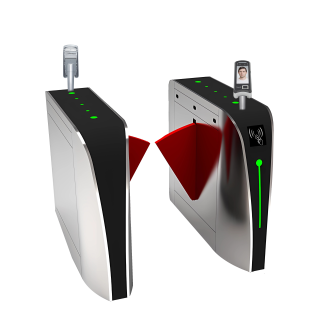
Wing Gate Turnstiles
Wing gate turnstiles provide fast opening and high throughput, making them suitable for airports, metro stations, and high-traffic corporate environments.
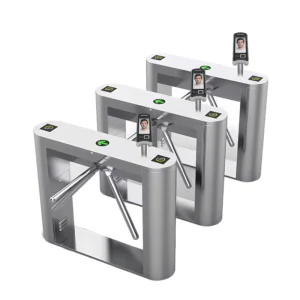
Tripod Turnstiles
Tripod turnstiles are widely used in factories, gyms, construction sites, and staff entrances due to their durability and cost efficiency.
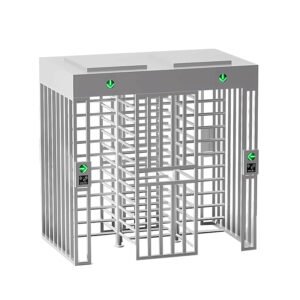
Full Height Turnstiles
Full height turnstiles deliver maximum security and are commonly installed in industrial areas, stadiums, power plants, and outdoor access points.
Key Features of Modern Security Turnstiles
Modern security turnstiles are built to integrate with intelligent access control platforms.
Common features include:
One-way and two-way access control
Anti-tailgating and anti-passback functions
Infrared safety and passage detection
Emergency release and fire alarm integration
Indoor and outdoor turnstile configurations
Compatibility with third-party access control systems
These features make turnstiles a reliable solution for secure pedestrian access control.
Applications of Turnstiles Across Industries
Turnstiles are used in a wide range of access control applications.
Common use cases include:
Office buildings and corporate campuses
Manufacturing plants and industrial facilities
Airports, metro stations, and public transportation systems
Stadiums, event venues, and amusement parks
Gyms, fitness centers, and clubs
Schools, hospitals, and government buildings
Benefits of Using Turnstiles for Access Control
Enhanced Security and Access Control
Turnstiles provide a physical and logical barrier that helps prevent unauthorized access, tailgating, and reverse entry. By enforcing one-person-per-passage rules and working with access control systems, turnstiles significantly improve overall site security and ensure that only authorized individuals can enter restricted areas.
Efficient Pedestrian Flow Management
Turnstiles help organize and control pedestrian traffic, especially in high-traffic environments such as office buildings, metro stations, and stadiums. By guiding people through designated entry and exit points, turnstiles reduce congestion, improve movement efficiency, and enhance user experience during peak hours.
Seamless Integration with Access Control Systems
Modern turnstiles are designed to integrate easily with various access control technologies, including biometric systems, RFID cards, and QR code solutions. This integration allows centralized management of access permissions, real-time monitoring, and accurate access records across different facilities.
Reduced Operational Costs
By automating access control and reducing reliance on manual security checks, turnstiles help lower labor costs and minimize human error. Once installed, turnstiles provide long-term, reliable operation with minimal maintenance requirements.
Improved Safety and Compliance
Turnstiles can be integrated with fire alarm and emergency systems to allow free passage during emergencies. Infrared sensors and safety mechanisms help prevent accidental injuries, ensuring compliance with safety regulations in public and commercial buildings.
Professional and Modern Facility Image
Installing modern turnstiles enhances the overall appearance of a facility and reflects a professional, well-managed environment. This is particularly important for corporate offices, commercial complexes, and public institutions where first impressions matter.
How to Choose the Right Turnstiles for Your Project
When selecting turnstiles, consider:
Required security level
Indoor or outdoor installation
Pedestrian traffic volume
Compatibility with existing access control systems
Compliance with safety and fire regulations
Choosing the right turnstile ensures long-term reliability and operational efficiency.
Conclusion
So, what are turnstiles?
They are essential components of access control and security systems, designed to manage pedestrian flow while protecting restricted areas. With various turnstile types and integration options available, turnstiles provide flexible solutions for different industries and environments.