Installing a turnstile correctly is essential to ensure security, smooth people flow, and long-term system reliability. Whether you are planning an access control upgrade for an office building, factory, transportation hub, or public venue, understanding the complete turnstile installation process helps reduce risks and improve system performance.
This guide explains the key steps, technical considerations, and best practices for professional turnstile installation.
What Is a Turnstile Access Control System?
A turnstile access control system is a physical security solution used to manage pedestrian entry and exit. It works together with authentication technologies such as RFID cards, QR codes, biometric readers, or facial recognition terminals.
When properly installed, a turnstile not only improves security but also ensures efficient and controlled pedestrian flow.
Pre-Installation Planning for Turnstiles
Proper planning is the foundation of a successful turnstile installation project.
Site Assessment
Before installation, the site should be carefully evaluated. Key factors include floor stability, available space for passage lanes, power supply access, and network connectivity. Environmental conditions, such as indoor or outdoor placement, also influence turnstile selection and installation methods.
Choosing the Right Turnstile Type
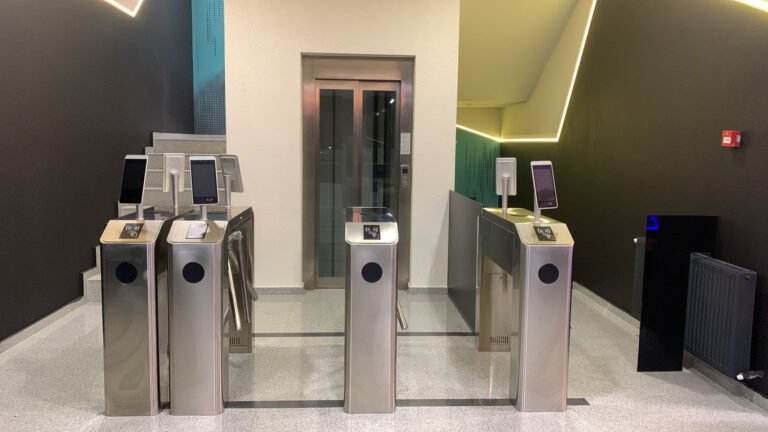
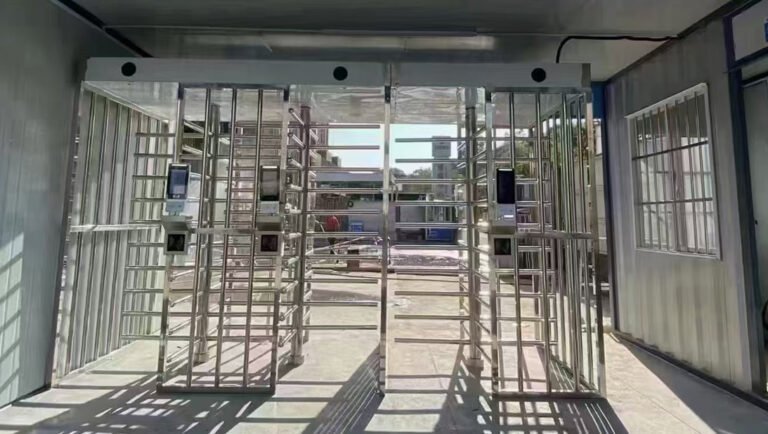
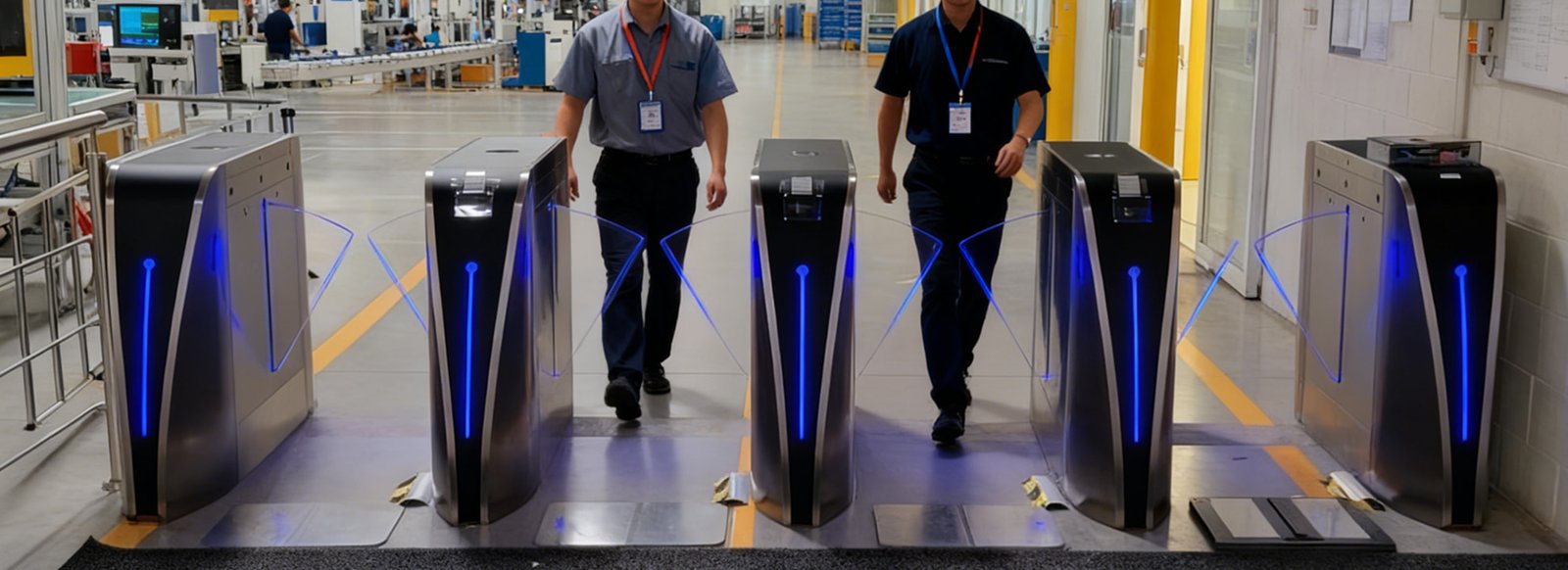
The installation process becomes easier when the turnstile type matches the application scenario. Tripod turnstiles are commonly used for basic access control, while swing gate turnstiles are suitable for office buildings and commercial spaces. Speed gate turnstiles support high pedestrian throughput, and full height turnstiles provide maximum security for perimeter control.
Turnstile Installation Process Explained
Step 1: Positioning and Layout Marking
The installation area should be measured and marked according to the turnstile’s dimensions and lane configuration. Sufficient clearance must be reserved to ensure smooth pedestrian movement and emergency evacuation.
Step 2: Mechanical Installation
Once the position is confirmed, the turnstile cabinet is fixed to the ground using anchor bolts. The base must remain level to prevent long-term mechanical stress and ensure stable operation.
Step 3: Power Supply and Wiring
Electrical wiring should follow the manufacturer’s technical specifications. Stable voltage, proper grounding, and organized cable routing are essential for safety and system reliability.
Step 4: Access Control Integration
After powering the unit, the turnstile is connected to the access control system. This may include card readers, QR code scanners, biometric devices, or facial recognition terminals. Communication parameters should be carefully configured to ensure accurate signal transmission.
Software Configuration and Functional Testing
Once the hardware installation is complete, system configuration begins. Access rules, authorization levels, and time schedules are set within the software platform. Emergency mode and free-passage settings should also be tested.
Multiple test runs are recommended to confirm that the turnstile responds correctly to both authorized and unauthorized access attempts.
Safety and Compliance Requirements
Turnstile installation must comply with local safety and fire regulations. Modern turnstiles are designed with features such as emergency opening functions, anti-tailgating detection, and infrared safety sensors. Correct calibration of these components is critical to maintaining both security and user safety.
Common Turnstile Installation Issues
Installation problems often occur due to inadequate preparation or incorrect setup. Typical issues include unstable mounting surfaces, incorrect power connections, disorganized cabling, or misaligned sensors. These problems can be avoided through proper planning and professional installation support.
Post-Installation Maintenance Recommendations
Regular maintenance helps ensure long-term reliability. Mechanical components should be inspected periodically, electrical connections checked, and sensors cleaned to maintain detection accuracy. Software updates also play an important role in system security and performance.
Why Professional Turnstile Installation Is Important
Professional installation ensures that the turnstile system meets safety standards, integrates smoothly with access control platforms, and operates reliably under daily use. A professionally installed turnstile reduces downtime, improves user experience, and lowers long-term operational costs.
Conclusion
Turnstile installation is a critical step in building an effective access control system. By following correct installation procedures and working with an experienced turnstile manufacturer, organizations can achieve secure, efficient, and scalable access management.
A well-installed turnstile not only enhances security but also supports smooth and controlled pedestrian flow in any environment.