
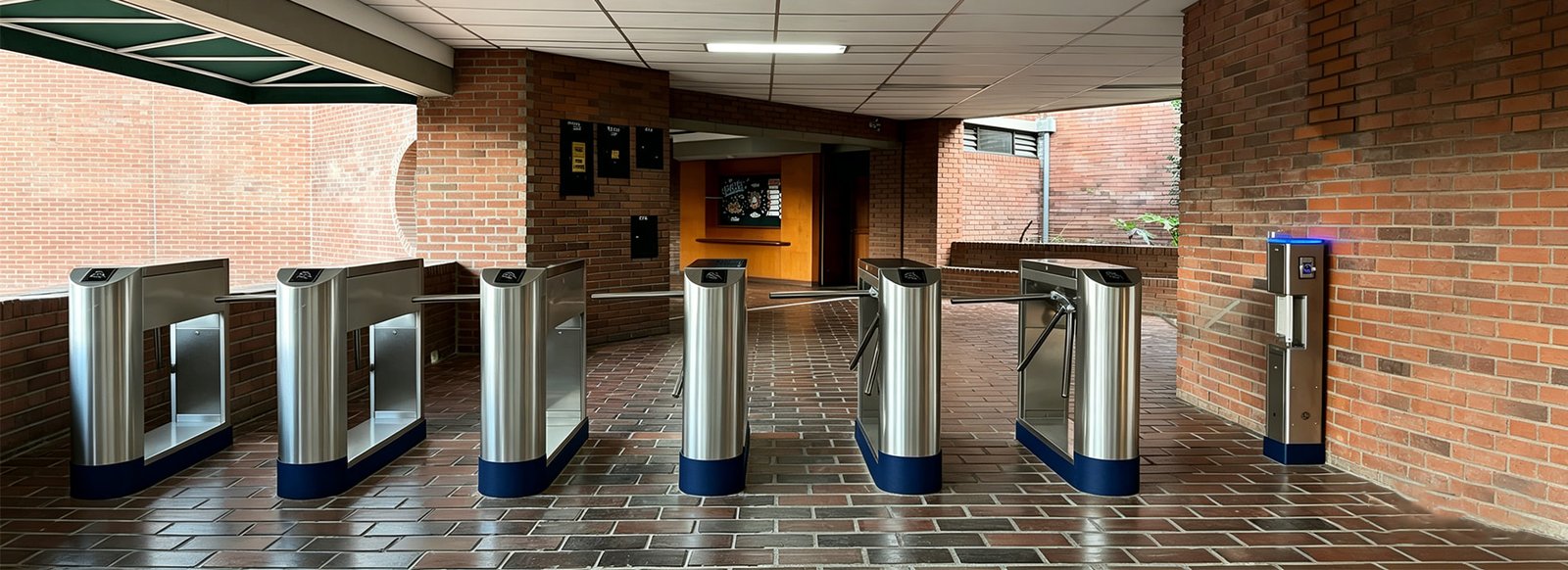
Tripod turnstiles are one of the most widely used solutions in modern security access control systems, providing a reliable way to regulate pedestrian entry. From office buildings to transportation hubs, they play a critical role in ensuring controlled and secure access.
In this guide, we will explain how a tripod turnstile works, its internal mechanism, key components, and how it integrates with advanced identity verification technologies to create a complete access control solution.
What Is a Tripod Turnstile?
A tripod turnstile is a semi-automatic or fully automatic gate system designed to control pedestrian traffic. It consists of three rotating arms mounted on a central hub, allowing one person to pass at a time after successful authentication.
Because of its compact design and cost-effectiveness, it is widely used in:
- Office buildings
- Factories and industrial sites
- Schools and campuses
- Public transportation stations
- Stadiums and event venues
How Does a Tripod Turnstile Work?
1. User Authentication
Before access is granted, the system verifies the user’s identity through an authentication method such as:
- RFID or IC cards
- QR codes
- PIN codes
- Biometric verification (fingerprint, face, or palm vein)
2. Signal Transmission
Once the user is verified, the access control system sends an authorization signal to the turnstile controller.
This signal determines whether the user is allowed to pass or denied entry.
3. Unlocking Mechanism
After receiving a valid signal, the tripod turnstile unlocks its rotating arms. The internal locking mechanism is released temporarily.
4. Controlled Rotation
The user pushes the arm, and the tripod rotates 120 degrees, allowing only one person to pass at a time. This ensures strict one-by-one access control.
5. Automatic Reset
After passage, the system automatically resets and locks again, ready for the next user.
Key Components of a Tripod Turnstile System
To better understand tripod turnstile working principles, it’s important to know its main components:
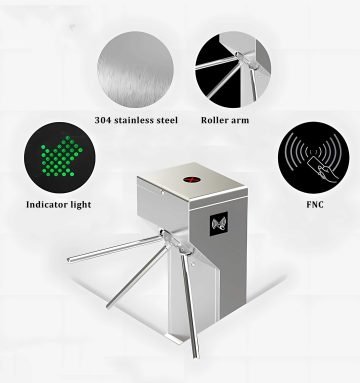
- Mechanical Structure: Stainless steel housing and rotating arms
- Control Board: Processes access signals and controls operation
- Locking Mechanism: Ensures secure locking and unlocking
- Sensors: Detect passage and prevent tailgating
- Access Control Interface: Connects to external systems such as biometric devices or card readers
Integration with Security Access Control Systems
Modern tripod turnstiles are not standalone devices. Instead, they are integrated into security access control systems for centralized management.
Biometric Integration
Tripod turnstiles can work with biometric devices to enhance security, including:
- Fingerprint recognition
- Facial recognition
- Iris recognition
- Palm vein authentication
This ensures that access is granted only to verified individuals.
Software Platform Integration
Advanced systems connect turnstiles to management platforms that enable:
- Real-time access monitoring
- Automatic attendance tracking
- User permission management
- Blacklist control
- Data reporting and analytics
This integration transforms a simple gate into a complete identity management solution.
Advantages of Tripod Turnstiles in Access Control
High Level of Security and Controlled Entry
Tripod turnstiles ensure that only one person can pass per authentication event, significantly reducing the risk of unauthorized entry and tailgating. The mechanical locking system works in coordination with access control signals to guarantee that entry is only granted after successful verification, making them a reliable solution for secure environments.
Cost-Effective Access Control Solution
One of the main advantages of tripod turnstiles is their affordability compared to more advanced gate systems. They offer a strong balance between functionality and cost, making them suitable for projects with large deployment requirements such as factories, campuses, and public facilities without compromising essential security performance.
Easy Integration with Multiple Access Technologies
Tripod turnstiles are highly flexible and can be integrated with various access control methods, including card readers, QR code systems, and biometric authentication devices. This compatibility allows organizations to upgrade their security systems without replacing existing infrastructure, improving long-term scalability.
Durable Structure for High-Traffic Environments
Built with stainless steel or similar durable materials, tripod turnstiles are designed for continuous use in high-traffic areas. Their mechanical structure ensures long service life with minimal maintenance requirements, making them suitable for environments with frequent daily usage such as transportation stations and industrial facilities.
Efficient Space Utilization and Easy Installation
Unlike larger gate systems, tripod turnstiles have a compact footprint, allowing them to be installed in areas with limited space. Their modular design also simplifies installation and deployment, reducing setup time and infrastructure complexity.
Reliable Data Collection and System Integration
When connected to access control software platforms, tripod turnstiles can support real-time data collection such as entry logs, attendance tracking, and user activity monitoring. This enables organizations to improve operational visibility and strengthen workforce or visitor management systems.
Common Use Cases
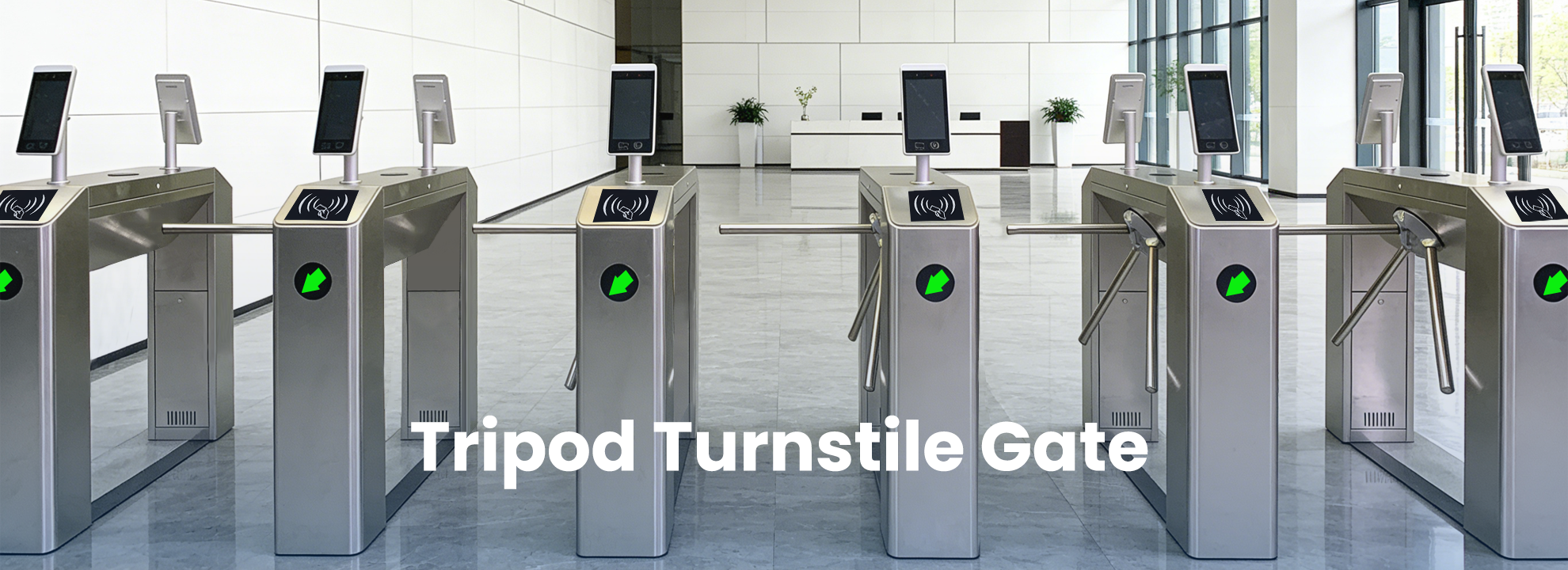
Tripod turnstiles are widely used across different industries:
- Corporate Offices: Employee access and attendance management
- Factories: Workforce entry control and safety compliance
- Transportation: Passenger flow control
- Education: Student access management
- Public Facilities: Secure and organized entry
Why Tripod Turnstiles Are Essential in Modern Security Systems
As security requirements continue to grow, organizations need solutions that combine identity verification, data management, and physical access control.
Tripod turnstiles meet these requirements by:
- Ensuring controlled entry
- Supporting advanced authentication methods
- Integrating with centralized systems
- Providing real-time monitoring and reporting
Conclusion
Understanding how a tripod turnstile works in security access control systems reveals its importance as a core component of modern security infrastructure.
By combining mechanical control with advanced authentication and software integration, tripod turnstiles provide a reliable, scalable, and efficient solution for managing pedestrian access in various environments.