
Metro stations handle thousands of passengers every day, making secure access control and efficient passenger flow management essential for daily operations. At busy entrances and exits, a reliable turnstile system can help organize passenger movement, control access points, and support fast passenger verification.
A smart turnstile access control solution for metro stations combines physical access barriers with modern identification and verification technologies. Depending on project requirements, metro turnstiles can work with QR codes, RFID or IC cards, facial recognition, biometric technologies, and third-party access management systems.
Designed for transportation facilities and other high-traffic environments, smart turnstile systems provide a practical foundation for building secure, organized, and efficient passenger access areas.
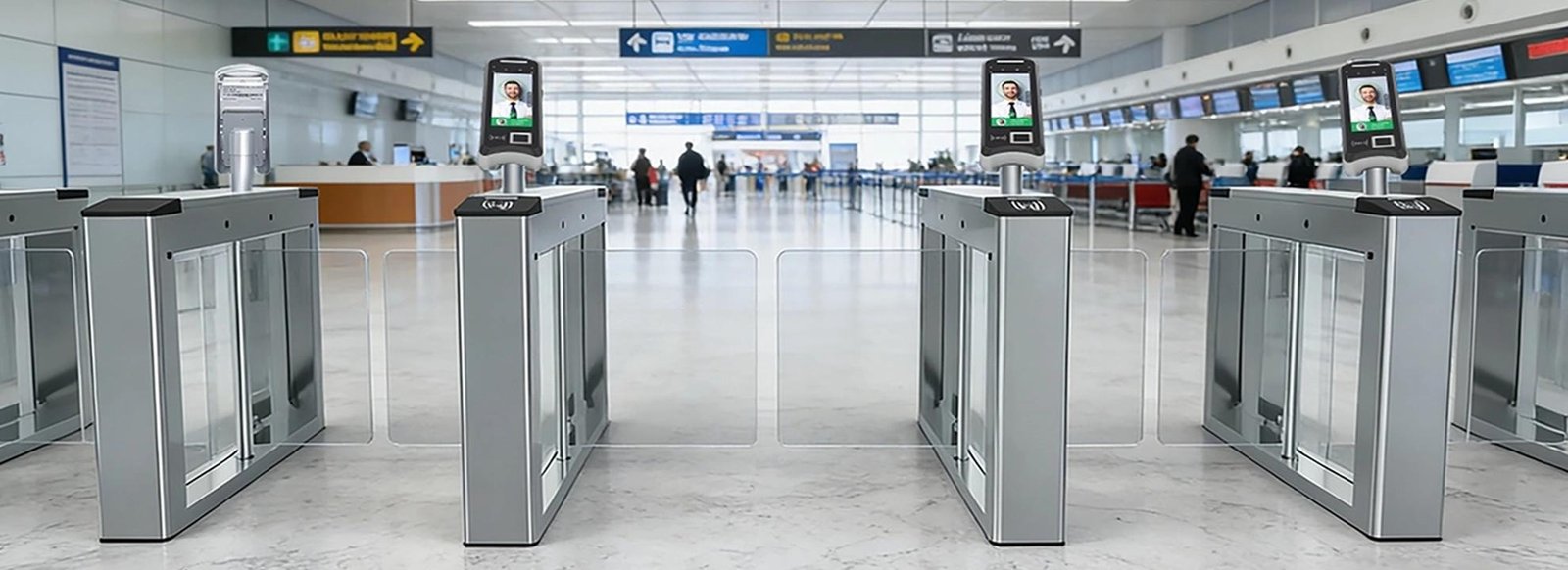
Why Metro Stations Need Smart Turnstile Access Control
Metro stations have different access control requirements from ordinary commercial buildings. Passenger traffic can increase significantly during commuting hours, holidays, and major events. The access control system therefore needs to support both security and high-volume passenger movement.
A properly designed metro station turnstile system can help:
- Organize passenger entry and exit
- Control access through designated lanes
- Support fast passenger verification
- Reduce unauthorized access
- Improve the management of controlled areas
- Connect with existing ticketing or access control systems
- Support continuous operation in high-traffic environments
Instead of treating a turnstile as an independent piece of hardware, a modern metro access control system can integrate the gate with verification devices and management software to create a complete passenger access solution.
Metro Turnstile System for Efficient Passenger Flow
One of the main challenges in a metro station is managing large numbers of passengers within a limited space.
During peak periods, passengers need to move through entrance and exit areas quickly. Long queues can affect the overall passenger experience and create additional pressure on station staff.
Turnstile gates create clearly defined access lanes and provide a controlled passage point for each passenger. When combined with fast verification technologies, they can help maintain smoother passenger flow through the station.
The number and configuration of turnstile lanes can be planned according to:
- Expected passenger volume
- Peak-hour traffic
- Entrance and exit layout
- Available installation space
- Required security level
- Passenger direction
- Integration requirements
This makes turnstile systems suitable for both individual station entrances and larger multi-lane deployments.
Different Turnstile Gates for Metro Stations
Different areas of a metro station may require different gate structures. The appropriate turnstile type can be selected according to passenger flow, available space, security requirements, and installation conditions.
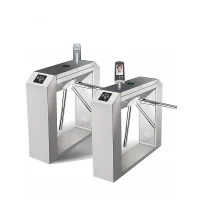
Tripod Turnstile
Tripod turnstiles provide a compact access control solution for controlled pedestrian areas. Their relatively small footprint makes them suitable for locations where installation space is limited.
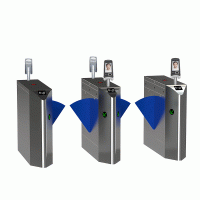
Flap Barrier Gate
Flap barrier gates provide a convenient passage solution for controlled pedestrian areas. They can be used where efficient passenger movement and organized access lanes are required.
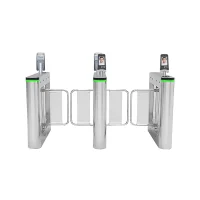
Swing Turnstile Gate
Swing turnstile gates provide a flexible solution for metro stations and other pedestrian access environments. They can support wider passage lanes and can be configured for different passenger flow and accessibility requirements.
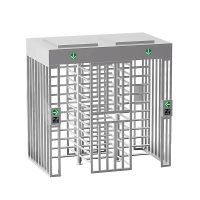
Full-Height Turnstile
For areas requiring a higher level of physical access control, full-height turnstiles provide a more restrictive passage environment. They can be used in controlled areas where preventing unauthorized entry is a key consideration.
Flexible Passenger Verification Methods
A metro station access control system may need to support different verification methods depending on the local transportation system and project requirements.
Turnstile gates can be integrated with technologies such as:
1. QR Code Verification
QR-based access provides a convenient contactless verification method for passengers using digital tickets or mobile applications. It can support fast scanning at station entrances and exits while reducing the need for physical tickets.
2. RFID and IC Cards
RFID and IC cards remain widely used for transportation access control. Passengers can simply present their cards to the reader, allowing the system to verify access information and control the turnstile accordingly.
3. Face Recognition
Face recognition enables contactless identity verification by matching a passenger’s facial features with registered information. It can be integrated with turnstile gates to support automated access and smart passenger management.
4. Palm Vein Recognition
Palm vein recognition uses the unique vein patterns beneath the palm to verify a passenger’s identity. As a contactless biometric technology, it can provide an additional verification option for metro access control systems, particularly for applications that require secure and reliable identity authentication.
5. Other Biometric Identification
Depending on project requirements, other biometric technologies can also be considered for identity verification and access control. This provides system integrators with greater flexibility when designing solutions for different transportation environments.
This range of verification methods allows metro operators and system integrators to select the appropriate access technology based on security requirements, passenger flow, existing ticketing systems, and project needs.
Turnstile and Access Control System Integration
A modern metro station access control solution often involves multiple systems working together.
The turnstile acts as the physical access point, while verification devices determine whether a passenger is authorized to pass. The access control or management platform can then handle permissions, device management, access records, and other operational functions.
A typical system architecture may include:
Passenger → Verification Device → Access Control System → Turnstile Gate → Passage
When valid access information is received, the system can send an opening command to the turnstile. After the passenger passes through, the gate returns to its controlled state.
This integrated approach helps create a more structured passenger access environment and allows the system to be adapted to different project requirements.
Built for High-Traffic Transportation Environments
Metro stations are high-frequency public transportation environments where access equipment may operate continuously throughout the day.
For this reason, turnstile selection should consider more than appearance. Important factors include:
- Structural durability
- Continuous operation capability
- Passenger throughput
- Verification speed
- Installation environment
- Maintenance requirements
- System compatibility
- Lane configuration
The right combination of gate structure and access technology can help maintain reliable operation during periods of heavy passenger traffic.
Metro Station Entrance and Exit Applications
Turnstile systems can be deployed in different areas of a metro station according to operational requirements.
Station Entrance
At station entrances, turnstiles can provide controlled passenger access and connect with ticket verification or other identification systems.
Station Exit
Exit lanes can be configured for one-way passenger movement and integrated with the corresponding verification system.
Restricted Areas
Turnstile gates can also be used to control access to staff-only or restricted areas within transportation facilities.
Staff Access
For employees and authorized personnel, biometric or card-based verification can be used to manage access to operational areas.
This flexibility allows turnstile technology to support different access control requirements throughout a metro facility.
Key Benefits of Smart Metro Turnstile Systems
A properly designed turnstile access control system can provide several benefits to metro station operations:
Improved Passenger Flow
Clearly defined access lanes help organize passenger movement and reduce unnecessary congestion at controlled entry points.
Enhanced Access Security
Turnstiles provide a physical barrier that works together with verification technologies to control passenger access.
Flexible Verification
Different verification technologies can be selected according to the project’s ticketing and access control requirements.
Better Operational Management
Integration with access control and management platforms can provide a more structured way to manage devices, permissions, and access records.
Scalable Deployment
Different turnstile configurations can be used across entrances, exits, staff areas, and other controlled zones.
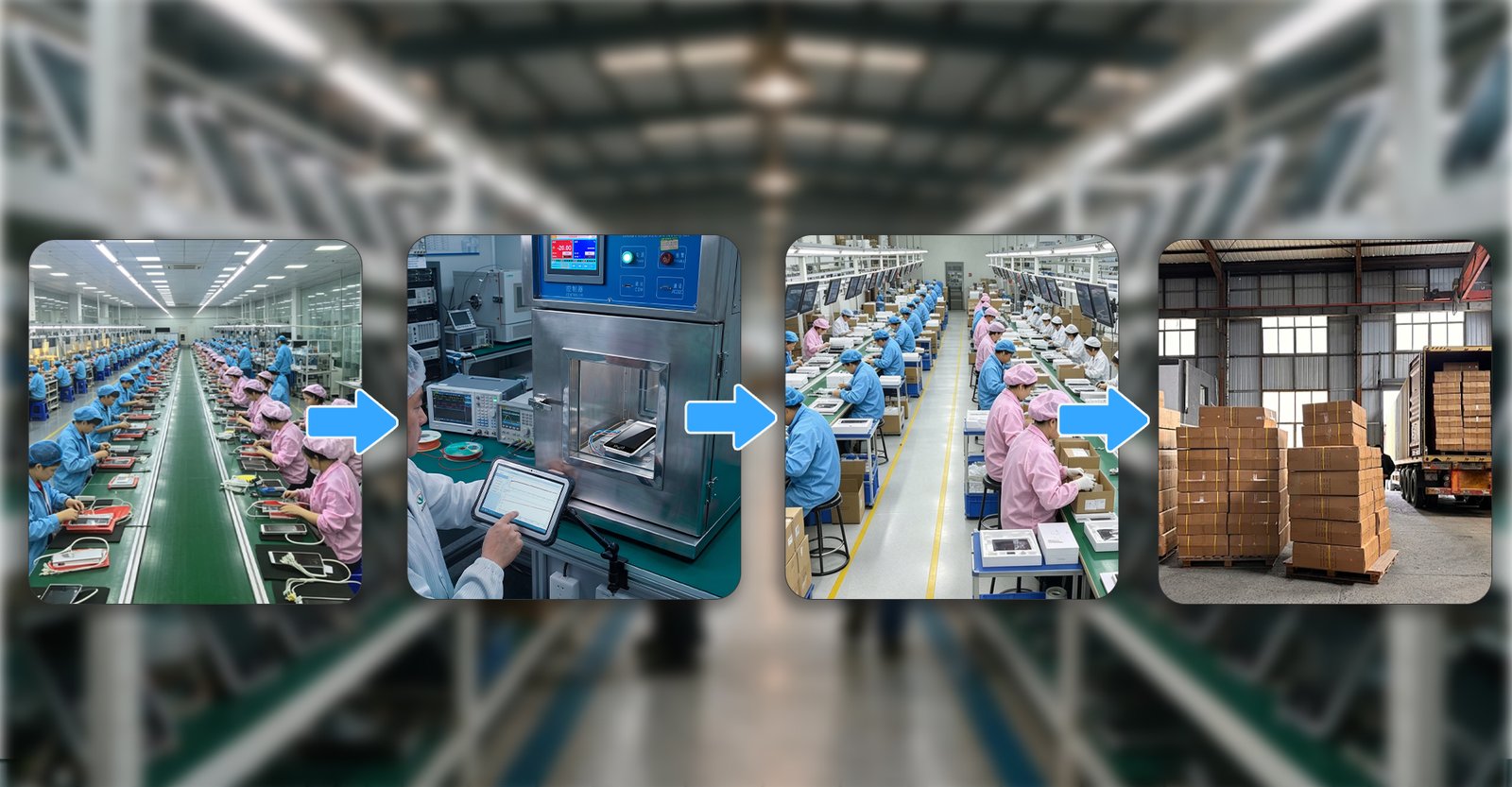
HFSecurity Turnstile and Access Control Solutions
HFSecurity provides biometric identification, access control, attendance, and smart security solutions for different industries and application environments.
For metro station projects, turnstile systems can be planned around passenger flow, installation conditions, gate configuration, verification technologies, and system integration requirements.
The combination of turnstile hardware and smart access control technologies provides a flexible foundation for transportation projects that require secure and efficient pedestrian management.
Build a Smarter Metro Station Access Control System
A metro station needs an access control solution that can balance security, efficiency, passenger flow, and long-term reliability.
Smart turnstile gates provide the physical foundation for controlled pedestrian movement, while QR codes, cards, biometrics, facial recognition, and other technologies can provide flexible verification options.
Whether it is a new metro station, an access control upgrade, or a multi-station transportation project, selecting the right turnstile configuration and access technology is an important part of system planning.
Looking for a smart turnstile access control solution for a metro station project? Contact HFSecurity to discuss your project requirements and find the right solution for your application.