
Choosing the right turnstile gate is an important decision when building a secure and efficient access control system. Different locations have different requirements for security, traffic flow, identification methods, space, and integration.
A suitable turnstile should not only control who enters and exits but also work smoothly with identification devices, access control software, and other security systems.
In this guide, we’ll explain the key factors to consider when choosing a turnstile gate for your access control project.
1. Start with Your Application
The first step is to determine where the turnstile will be installed and what type of users will pass through it.
Common applications include:
- Office buildings
- Factories and industrial facilities
- Gyms and fitness centers
- Residential communities
- Schools and universities
- Government buildings
- Transportation facilities
- Stadiums and entertainment venues
- Commercial buildings
For example, a gym may prioritize fast member access and convenient identification, while a factory may focus more on employee attendance, security, and access records.
Understanding the application helps you choose the right turnstile type and identification technology.
2. Choose the Right Type of Turnstile Gate
Different turnstile designs are suitable for different environments.
![{"data":{"infoStickerId":"????????","stickerId":"","playId":"","effect_id":"tool","product":"retouch","capability_key":[],"imageEffectId":"","enter_from":"enter_launch","filterId":"","pictureId":"F4F7B6C6-6265-4E29-82C7-93D7D5FDBB4B","os":"ios","effect_type":"tool","capability_extra_v2":{},"appversion":"13.0.0","activityName":""},"source_type":"douyin_beauty_me"}](https://hfteco.com/wp-content/uploads/elementor/thumbs/Romania-GYM-RA08-Tripod-1-rn4vjinb4lmu1ytyubf2qj3g494zy2enh9gqcq0yd4.jpg "Romania GYM RA08 Tripod (1)")
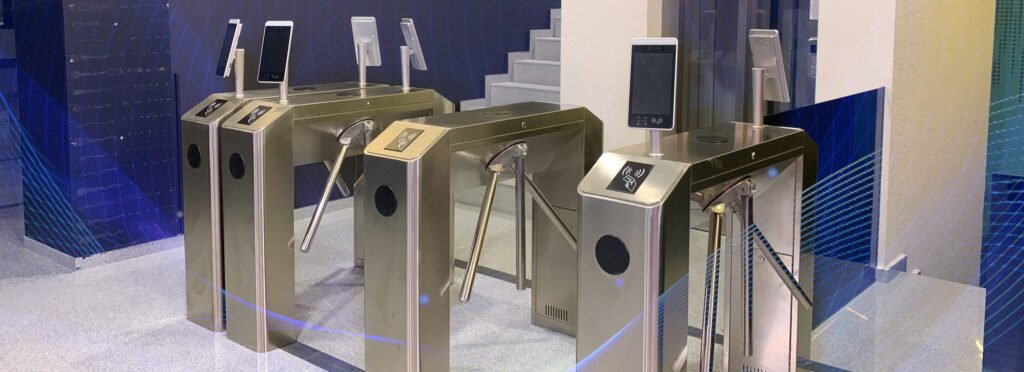
Tripod turnstiles are a practical option for locations that require controlled pedestrian access at an affordable cost.
They are commonly used in:
- Offices
- Factories
- Schools
- Gyms
- Staff entrances
They are suitable for applications where basic access control and reliable operation are the main priorities.
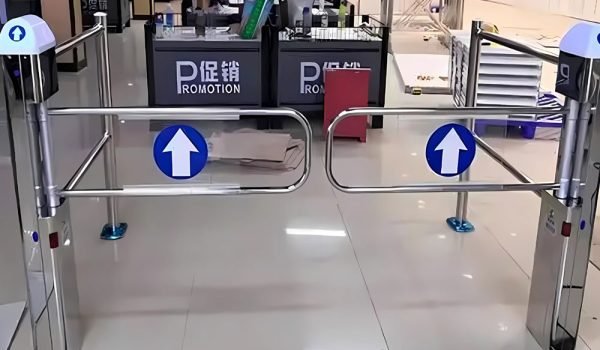
Swing gates provide a wider passage than traditional tripod turnstiles, making them suitable for environments where users may need more space.
They can be used in offices, commercial buildings, gyms, and other facilities where accessibility and user convenience are important.
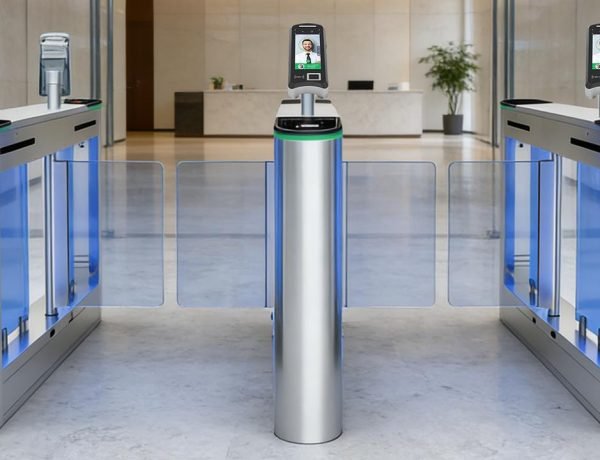
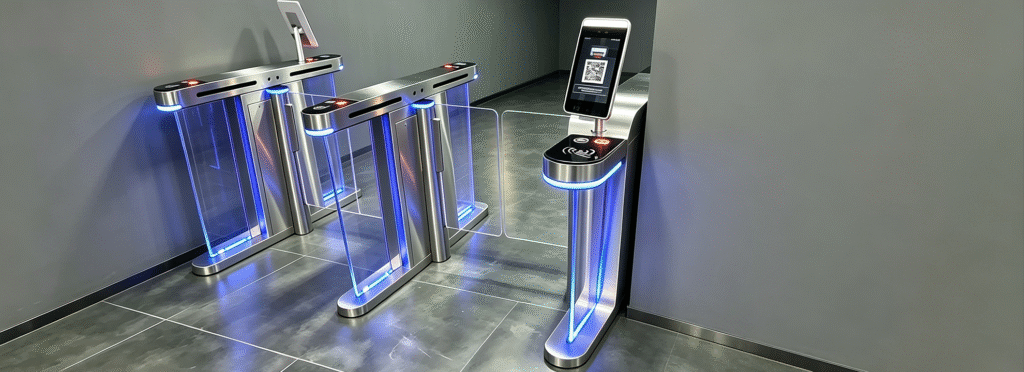
Speed gates are designed for high-traffic environments that require fast and efficient pedestrian access.
They are commonly used in:
- Corporate offices
- Airports
- Financial institutions
- High-end commercial buildings
- Large facilities
Their modern appearance also makes them suitable for projects where both security and design are important.
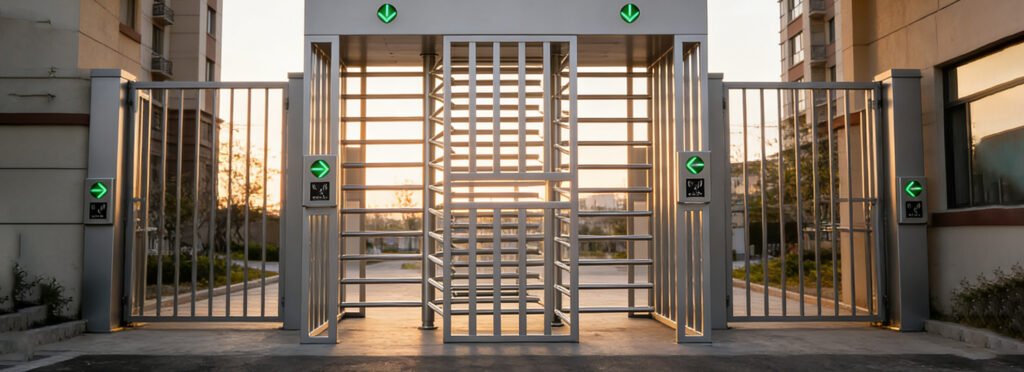
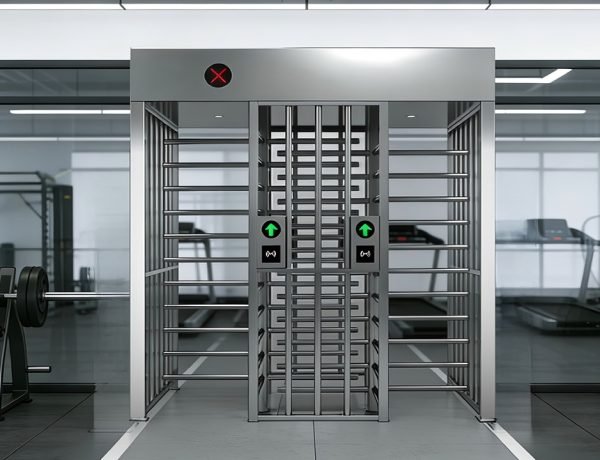
Full-height turnstiles provide a higher level of physical access control and are designed to prevent unauthorized users from simply walking around the barrier.
They are often used for:
- Factories
- Construction sites
- Industrial facilities
- Stadiums
- Outdoor entrances
- High-security areas
For outdoor or high-security projects, full-height turnstiles can be an effective choice.
3. Consider the Required Identification Method
The turnstile itself is only one part of an access control system. The identification method installed at the entrance is equally important.
Depending on your project, you may consider:
- Face recognition
- Palm vein recognition
- Fingerprint recognition
- NFC/RFID cards
- QR codes
- Mobile credentials
- Multi-modal biometric identification
For example, a modern gym access control system could combine a turnstile with face recognition to allow members to enter without carrying a card.
For projects requiring higher security or greater flexibility, multiple authentication methods can be integrated into the same access control system.
4. Consider Biometric Integration
Biometric identification can make turnstile access control more convenient and secure.
Face recognition can provide touchless authentication, while palm vein recognition offers another biometric option for users who prefer not to use cards or touch-based identification.
A multi-modal biometric device can also combine different authentication methods, such as face, palm vein, fingerprint, NFC, or QR code, depending on the device configuration.
This makes the system more flexible for different users and application scenarios.
5. Check System Integration Requirements
A turnstile should be able to work with the rest of your access control system.
Before purchasing, check whether the solution supports the interfaces and integration methods required for your project.
For example, you may need to integrate:
- Biometric identification devices
- Access control software
- Attendance management systems
- Visitor management systems
- Membership systems
- Payment systems
- Existing security platforms
- Third-party software
For projects that require customized integration, SDK and API support can make it easier to connect identification devices and turnstiles with existing software systems.
6. Think About Traffic Flow
The number of people passing through the entrance is another important factor.
A small office with 50 employees has very different requirements from a factory with thousands of employees or a stadium with large crowds.
Consider:
- Number of users
- Peak entry and exit times
- Number of lanes required
- Entry and exit direction
- Authentication speed
- Emergency evacuation requirements
For high-traffic locations, speed gates or multiple turnstile lanes may provide better efficiency than a single basic turnstile.
7. Consider Accessibility Requirements
Not every user can comfortably pass through a standard turnstile.
If your project needs to accommodate wheelchair users, people carrying large items, or other users who require additional space, consider a wider swing gate or dedicated accessible lane.
The entrance design should balance security with convenience and accessibility.
8. Indoor or Outdoor Installation?
The installation environment can significantly affect your choice.
For indoor projects, appearance, noise level, space utilization, and user experience may be more important.
For outdoor installations, you should pay closer attention to:
- Weather resistance
- Waterproofing
- Temperature range
- Material durability
- Corrosion resistance
- Outdoor identification performance
Full-height turnstiles are often considered for outdoor environments where stronger physical access control is required.


9. Consider Software and Management
A complete access control project normally requires more than hardware.
The management platform should allow administrators to manage users, permissions, access records, and other relevant data.
Depending on the project, the system may also include:
- Employee attendance management
- Visitor management
- Access permissions
- Real-time access records
- Device management
- Remote management
- Reporting
- Multi-site management
For businesses operating multiple locations, centralized software management can make daily administration much easier.
10. Consider Future Expansion
A good access control system should not only meet today’s requirements but also allow room for future development.
Before selecting a turnstile solution, consider whether you may need to:
- Add more entrance lanes
- Add biometric devices
- Connect additional software
- Support new authentication methods
- Expand to additional locations
- Integrate with existing business systems
Choosing an integration-friendly solution from the beginning can reduce the cost and complexity of future upgrades.

11. Turnstile Gate + Biometric Identification: A Complete Access Solution
For many modern projects, the best solution is not simply choosing a turnstile, but building a complete access control system around it.
A typical system can include:
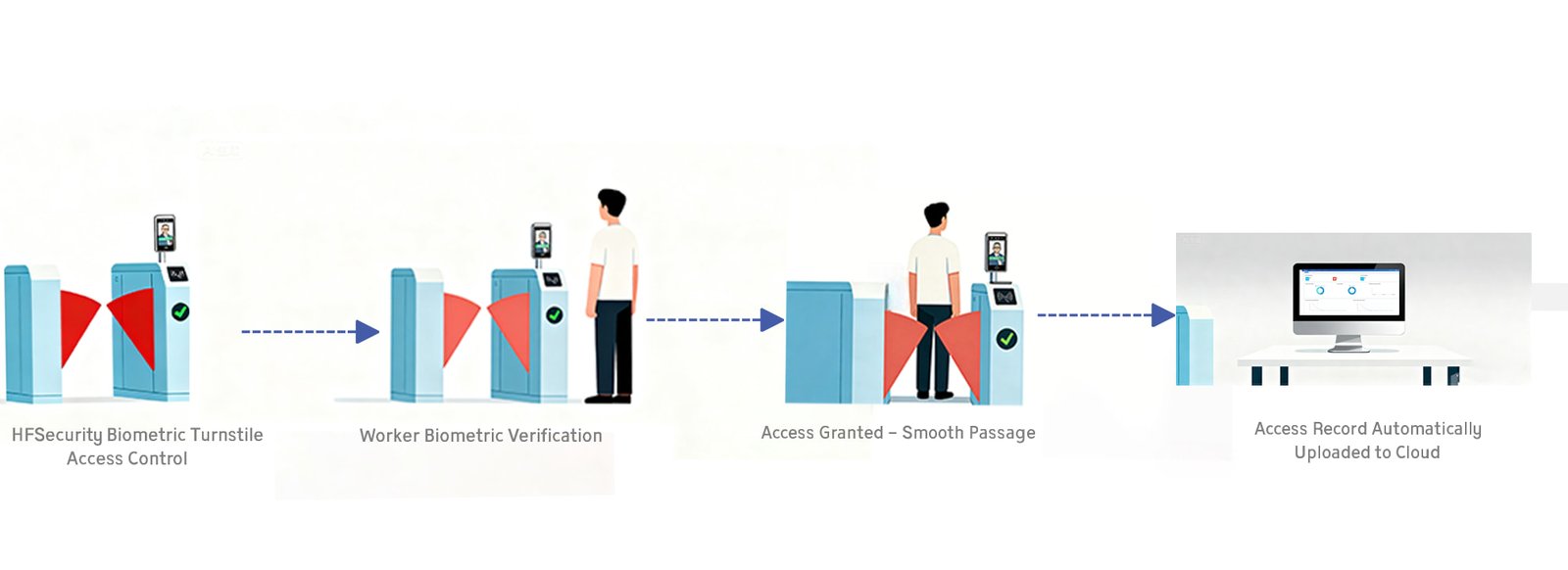
Turnstile Gate → Biometric Identification Device → Access Control Software → User & Access Management
For example, a factory could use a turnstile integrated with a multi-modal biometric terminal. Employees can authenticate using face recognition, palm vein recognition, or NFC, while the software records access and attendance information.
For a gym, the same concept can be used to connect member authentication with the turnstile, creating a convenient entrance system while reducing unauthorized access.
This type of integrated architecture allows hardware, identification, and software to work together as one complete solution.
12. How to Choose the Right Turnstile Gate: A Quick Checklist
Before making a purchase, ask these questions:
- What is the application scenario?
- How many people will use the entrance?
- How high is the peak traffic?
- Indoor or outdoor installation?
- What level of security is required?
- Which identification methods are needed?
- Do you need biometric authentication?
- Does the turnstile need to integrate with existing software?
- Are SDK or API integration capabilities required?
- Do you need attendance or visitor management?
- Is accessibility required?
- Will the system need to expand in the future?
- Do you need OEM/ODM customization?
Answering these questions will help you narrow down the most suitable turnstile solution for your project.
Conclusion
Choosing the right turnstile gate is about more than selecting a physical barrier. The best solution should match your application, traffic requirements, security level, identification methods, installation environment, and software integration needs.
For modern access control projects, turnstiles can be combined with face recognition, palm vein recognition, fingerprint, NFC, QR code, and other identification technologies to create a more flexible and intelligent entrance system.
Whether you are planning access control for a factory, office, gym, residential community, school, or commercial facility, choosing an experienced manufacturer that can provide both turnstile hardware and integrated identification solutions can make the entire project easier to implement and scale.
Looking for a turnstile gate solution for your project? Contact HFSecurity to discuss your application, identification requirements, and integration needs.