
As businesses, gyms, schools, offices, and public facilities look for more convenient ways to manage entry, traditional access methods such as physical cards and keys are increasingly being replaced by digital credentials.
A turnstile gate with QR code provides a simple and efficient way to combine QR-based identification with physical access control. Instead of relying only on access cards, users can scan a QR code using a designated reader or terminal before entering through the turnstile.
This type of QR code access control system can help organizations improve entry efficiency, reduce unauthorized access, and simplify visitor and membership management.
In this article, we will explain how a QR code turnstile gate works, its main benefits, common applications, and what to consider when choosing a complete turnstile access control solution.
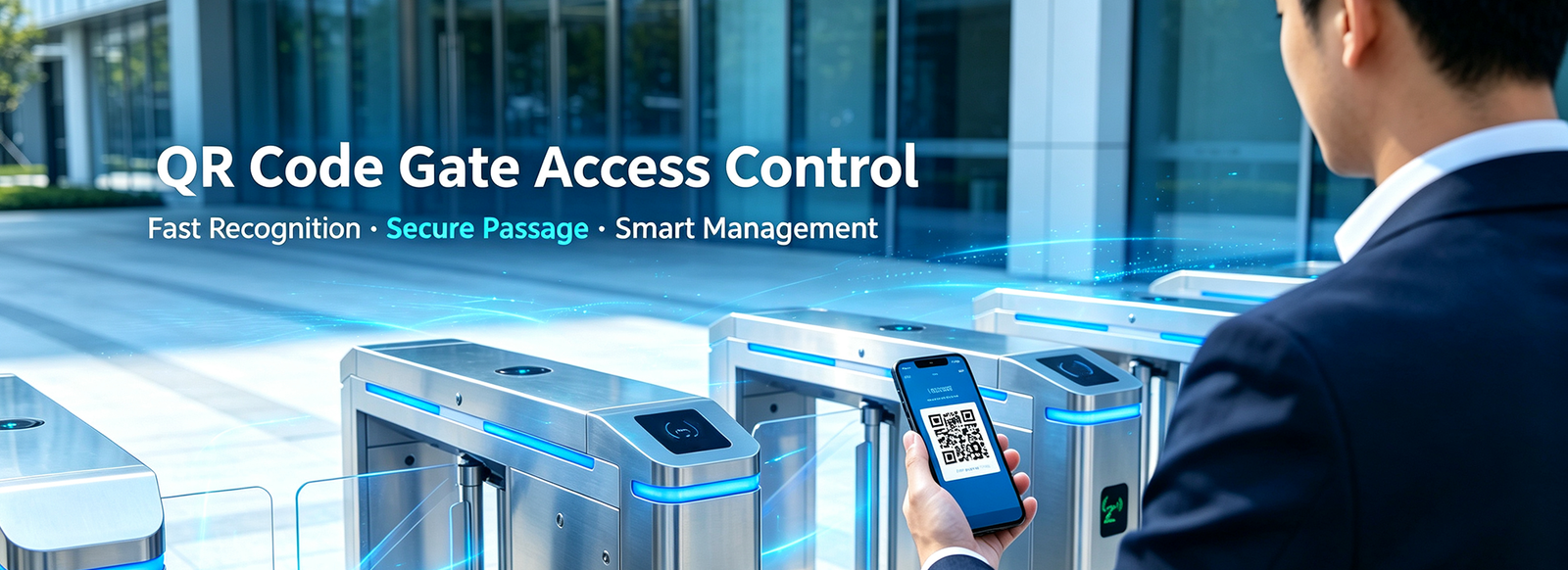
What Is a Turnstile Gate with QR Code?
A turnstile gate with QR code is an access control system that combines a physical turnstile with QR code authentication.
The QR code can contain information associated with a user, visitor, ticket, membership, reservation, or access authorization. When the user presents the QR code to the scanning terminal, the system verifies the credential and determines whether access should be granted.
If the QR code is valid, the turnstile unlocks or rotates, allowing the person to pass through.
A typical system may include:
- Turnstile gate
- QR code scanner or access terminal
- Access control software
- Network connection
- User or visitor database
- Optional biometric identification devices
This configuration creates a QR code turnstile access control system that can be adapted to different entry management requirements.
How Does a QR Code Turnstile Gate Work?
The basic process of a QR code entry system is straightforward.
1. Generate or Assign a QR Code
A QR code is generated for an authorized user, visitor, member, ticket holder, or employee.
Depending on the application, the QR code can be:
- A permanent credential
- A temporary visitor pass
- A membership credential
- An event ticket
- A reservation code
- A time-limited access credential
2. Scan the QR Code
The user presents the QR code to the QR scanner integrated into or connected to the turnstile.
The QR code can be displayed on a smartphone or printed on paper, depending on the system configuration.
3. Verify Access Permission
The access control system checks the QR code against the configured authorization rules.
For example, the system can determine whether the credential is:
- Valid
- Expired
- Already used
- Authorized for a specific area
- Restricted to a specific date or time
4. Unlock the Turnstile
If the QR code is successfully verified, the system sends an access command to the turnstile.
The gate then allows the user to pass.
5. Record the Entry
The access event can be recorded in the management platform, allowing administrators to review entry and exit records.
This provides better visibility into who accessed the facility and when.
Key Benefits of a Turnstile Gate with QR Code
A QR-based turnstile access system offers several advantages compared with traditional access methods.
1. Convenient Contactless Access
Users do not necessarily need to carry a physical access card.
A smartphone can display the QR code, allowing users to present their credentials directly at the entrance.
This is particularly useful for:
- Gyms
- Offices
- Events
- Visitor management
- Educational facilities
- Commercial buildings
2. Fast Entry and Exit
QR code scanning can provide a quick authentication process, helping reduce queues at busy entrances.
For locations with a high number of visitors, combining QR authentication with a turnstile can create a more organized secure entry system.
3. Temporary Access Management
QR codes are particularly useful when temporary access needs to be provided.
For example, an organization can issue a QR code to a visitor that is valid only during a specific period.
After the authorized period expires, the QR code can no longer be used.
This makes QR-based access control suitable for visitor access control systems and event management.
4. Reduced Dependence on Physical Cards
Physical access cards can be lost, damaged, shared, or forgotten.
A QR code displayed on a smartphone can provide an alternative credential for certain access scenarios.
Organizations can therefore combine QR codes with other authentication methods according to their security requirements.
5. Flexible Access Rules
A modern turnstile access control system can define different access permissions based on users, locations, and time periods.
For example:
- Employees can access during working hours.
- Gym members can enter according to membership validity.
- Visitors can access only during their appointment.
- Event attendees can enter only on the event date.
This makes QR code access more flexible than simply opening or closing a physical gate.
Where Can a QR Code Turnstile Gate Be Used?
A QR code turnstile gate can be deployed in many environments where controlled entry and efficient visitor flow are required.
Schools and Educational Facilities
Educational institutions can use controlled access systems to manage students, teachers, staff, and visitors.
Depending on the school’s security requirements, QR codes can be combined with other credentials such as RFID cards or biometric identification.
Residential and Commercial Properties
QR-based access can also be used for temporary visitors, delivery personnel, and authorized guests.
Instead of providing a physical card, property managers can issue time-limited QR credentials.
This can improve convenience while maintaining controlled access.
Events and Exhibitions
QR codes are especially useful for event access.
Visitors can receive digital tickets containing QR codes and scan them at the entrance.
A turnstile gate with QR code can help automate ticket verification and control the flow of attendees.
Offices and Commercial Buildings
Businesses can use QR codes for employees, visitors, and temporary contractors.
For example, a visitor can receive a temporary QR code before arriving at the office. After scanning the code at the entrance, the smart turnstile gate verifies the visitor’s authorization and allows access.
This can simplify visitor management while reducing manual reception work.
Gyms and Fitness Centers
Gyms can use QR codes to verify membership and manage member entry.
A QR code turnstile system can be integrated with gym membership software, allowing members to scan their credentials before entering.
For larger facilities, QR authentication can also be combined with biometric recognition to provide additional options for members.
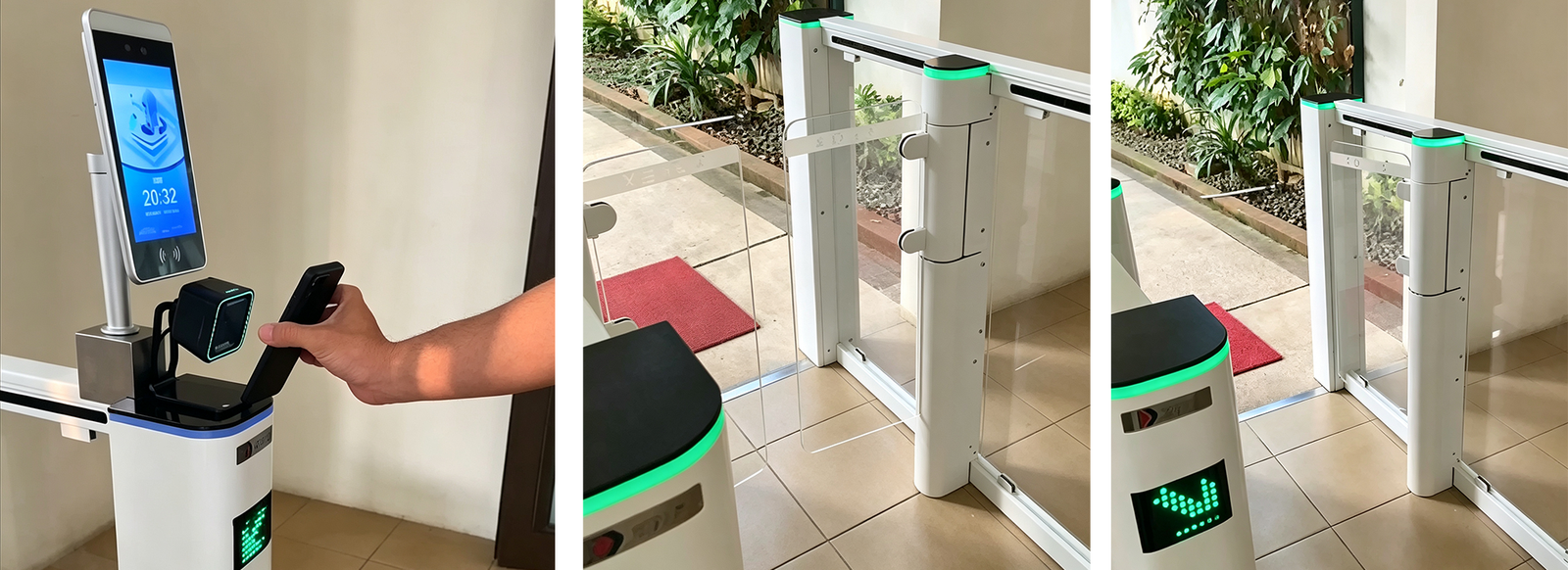
Combining QR Code with Biometric Access Control
QR codes provide convenience, but some applications require stronger identity verification.
This is where biometric authentication can complement QR-based access.
A modern biometric turnstile can support multiple authentication methods, including:
- Face recognition
- Palm vein recognition
- Fingerprint recognition
- NFC
- QR code
For example, a facility could allow visitors to enter using a temporary QR code while employees use face recognition or palm vein authentication.
This approach allows organizations to choose the appropriate authentication method based on different user groups and security requirements.
QR Code + Turnstile + Access Control Software
A complete access control solution should not only verify credentials at the gate. It should also provide centralized management.
A typical QR code access control system can connect the turnstile, authentication terminal, and management software.
The software can help administrators manage:
- User information
- Access permissions
- Visitor records
- Entry and exit logs
- Time schedules
- Device management
- Access groups
- Authentication methods
With centralized management, administrators can monitor multiple entrances and manage access policies from a single platform.
For businesses mana
How to Choose a Turnstile Gate with QR Code
When selecting a turnstile gate with QR code, it is important to look beyond the QR scanner itself.
1. Authentication Methods
Consider whether the system needs QR code only or whether it should support additional credentials such as face recognition, NFC, fingerprint, or palm vein recognition.
2. Integration Capability
Check whether the access control terminal and software can integrate with your existing visitor management, membership, attendance, or access control platform.
3. Turnstile Type
Different environments may require different gate configurations, including:
- Tripod turnstile
- Swing barrier gate
- Flap barrier gate
- Full-height turnstile
The choice depends on the required security level, available space, traffic volume, and entrance design.
4. Software Management
Hardware alone is not enough for a complete access control solution.
Look for a system that provides centralized user management, access permissions, event records, and device management.
5. Scalability
If the project may expand in the future, choose a system that can support additional entrances, authentication terminals, and users.

Build a Smarter Turnstile Access Control System
A turnstile gate with QR code provides a practical way to combine digital authentication with physical access control.
For applications such as gyms, offices, schools, events, commercial buildings, and visitor management, QR code authentication can provide fast and convenient entry while allowing organizations to control access more efficiently.
For projects requiring higher security, QR code authentication can also be combined with biometric technologies such as face recognition and palm vein recognition.
The result is a more flexible smart turnstile access control system that can adapt to different users, locations, and security requirements.
If you are looking for a complete access control solution, HFSECURITY provides biometric terminals, QR-enabled access control devices, turnstile gates, and management solutions for different commercial and institutional applications.
Frequently Asked Questions
Yes. A turnstile can be connected to a QR code reader or an access control terminal with QR scanning capability. After the QR code is verified, the system can send an access command to the turnstile.
Yes. QR codes can be used for gym memberships, temporary visitors, and event-based access. A QR code turnstile gate can help automate member verification and entry management.
Yes. A multi-modal access control system can combine QR codes with face recognition, NFC, fingerprint, or other authentication technologies.
Tripod turnstiles, swing barrier gates, flap barriers, and other turnstile configurations can be integrated with QR code authentication depending on the hardware and access control system.
Security depends on how the QR credential is generated, verified, and managed. Time-limited credentials, access permissions, centralized management, and additional biometric authentication can be used to strengthen the overall system.