
In today’s security-focused environment, controlling and monitoring pedestrian access is a critical part of facility management. Businesses, government institutions, industrial facilities, and transportation hubs require reliable systems that prevent unauthorized entry while allowing authorized individuals to move efficiently.
This is where security turnstiles play a crucial role.
Security turnstiles are widely used as part of modern access control systems, providing both physical barriers and intelligent authentication technology. By combining mechanical gate structures with electronic verification systems such as RFID cards, biometric identification, and QR code access, security turnstiles create a secure and organized entry management solution.
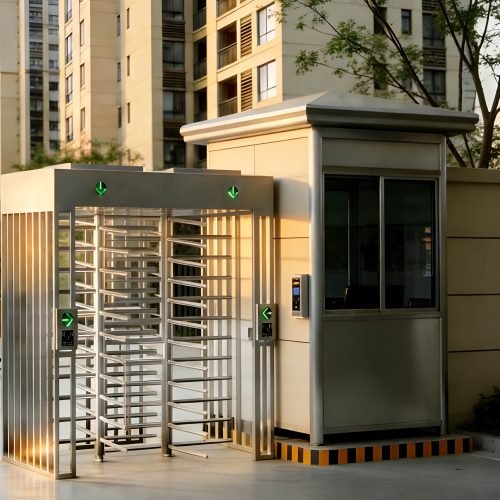
In this article, we will explore what security turnstiles are, how they work, their main types, key features, and the benefits they bring to modern facilities.
What Are Security Turnstiles?
A security turnstile is a controlled access gate designed to regulate pedestrian movement by allowing only one person to pass at a time after successful authorization.
Unlike traditional doors or open gates, turnstile access control systems create a physical barrier that prevents unauthorized entry, tailgating, and uncontrolled pedestrian flow.
Security turnstiles are typically installed at locations where high security, controlled entry, and traffic management are required, including:
Corporate office buildings
Manufacturing plants and industrial facilities
Stadiums and entertainment venues
Airports and transportation hubs
Government institutions
Data centers and research laboratories
Schools and universities
Modern security turnstile systems are often integrated with electronic access technologies such as:
RFID card readers
Facial recognition systems
Fingerprint scanners
QR code or mobile access credentials
PIN code verification
This combination of mechanical barriers and digital authentication makes security turnstiles one of the most effective solutions for controlling pedestrian access.
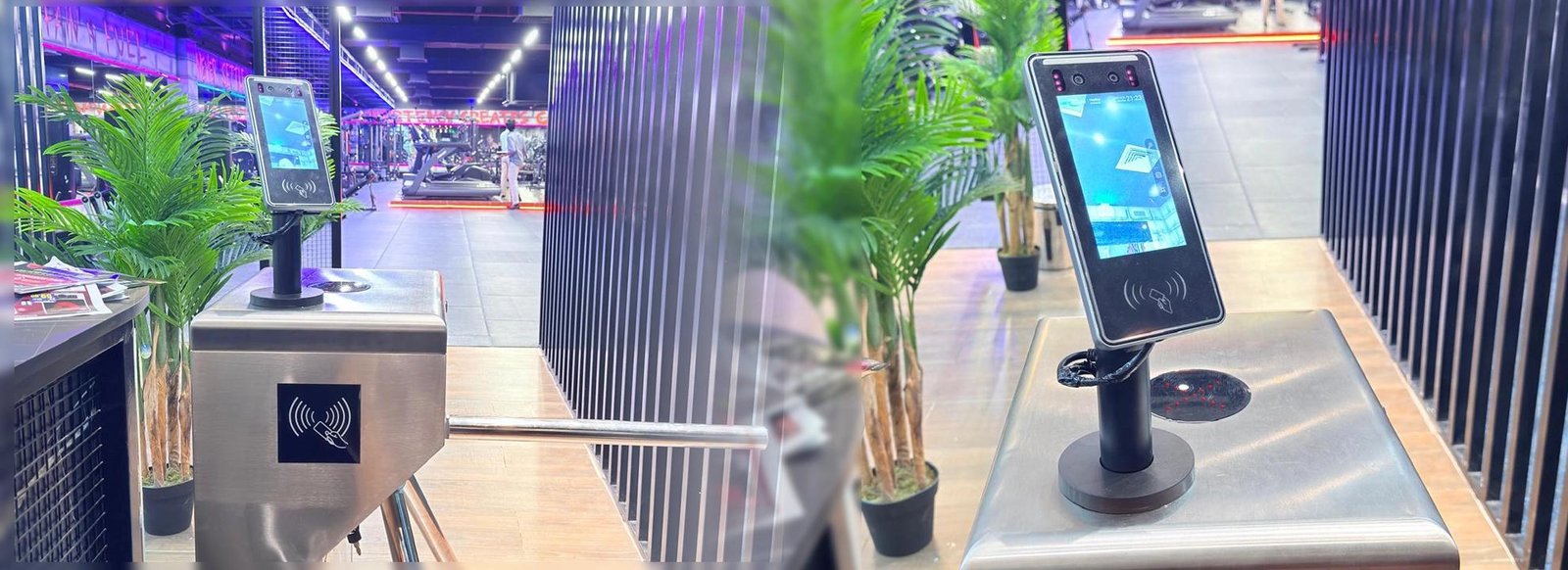
Types of Security Turnstiles
Security turnstiles operate through a combination of access control verification, mechanical locking systems, and electronic sensors. The process typically follows several steps to ensure secure and efficient entry.
Full Height Security Turnstiles

Full height security turnstiles provide the highest level of physical security.
These turnstiles extend from the floor to the top frame, forming a rotating cage that prevents climbing or bypassing.
They are commonly used in:
Industrial facilities
Stadium entrances
High-security government areas
Construction sites
Full height turnstiles are ideal for outdoor installations where strict security is required.
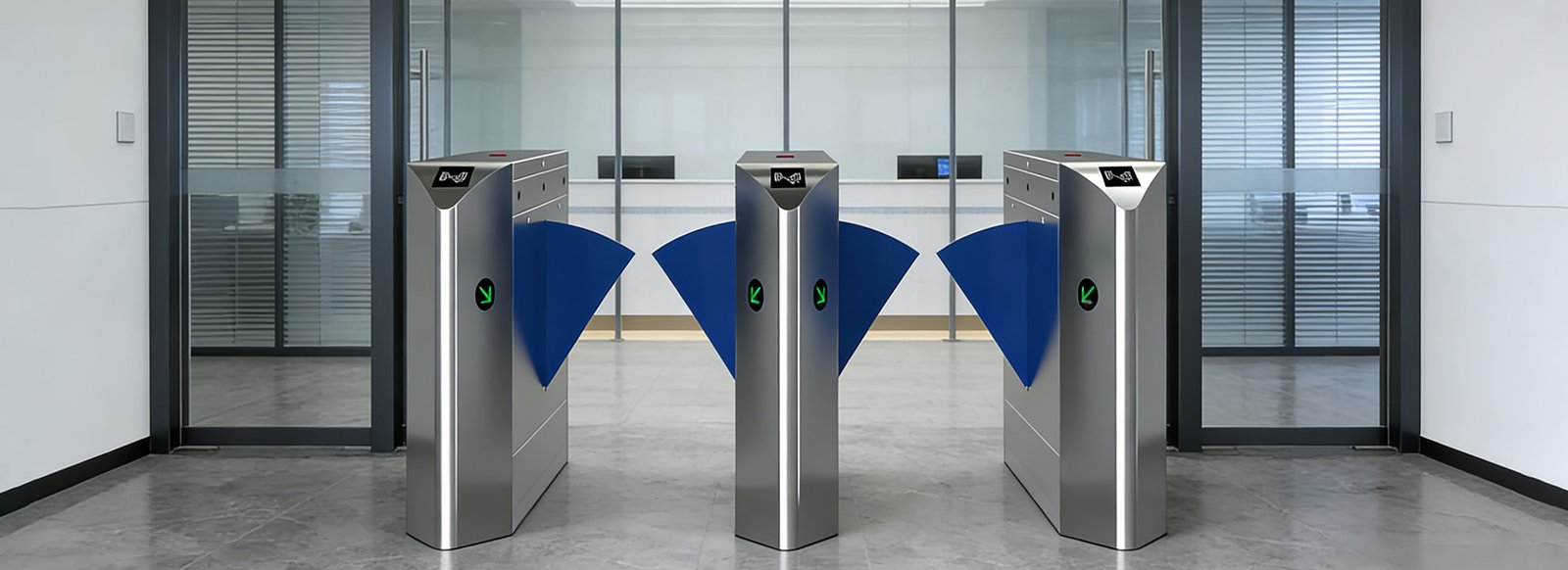
Half Height Turnstiles
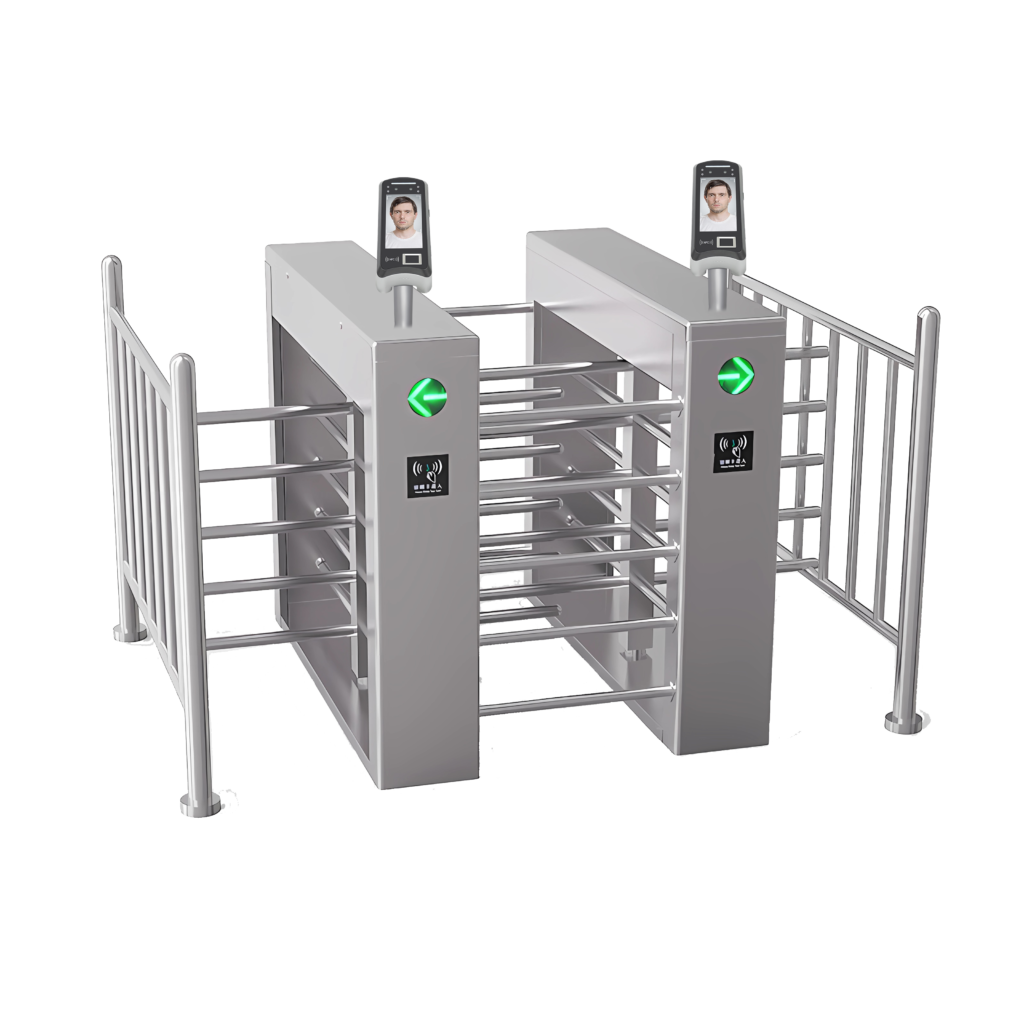
Half height turnstiles are widely used in corporate offices, metro stations, and commercial buildings.
They offer controlled access while maintaining a more open and visually appealing design.
These turnstiles are suitable for locations where security is important but the environment requires a welcoming appearance.
Tripod Turnstiles
Tripod turnstiles use three rotating arms to allow passage one person at a time.
They are compact, cost-effective, and widely used in:
Public transportation systems
Gyms and fitness centers
Stadiums
Factories
Tripod turnstiles are known for their durability and ability to handle high pedestrian traffic.
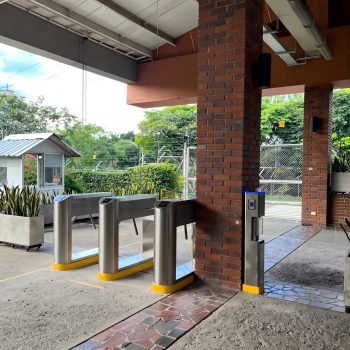
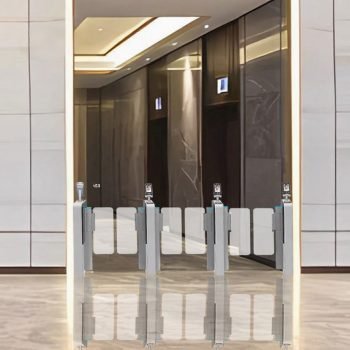
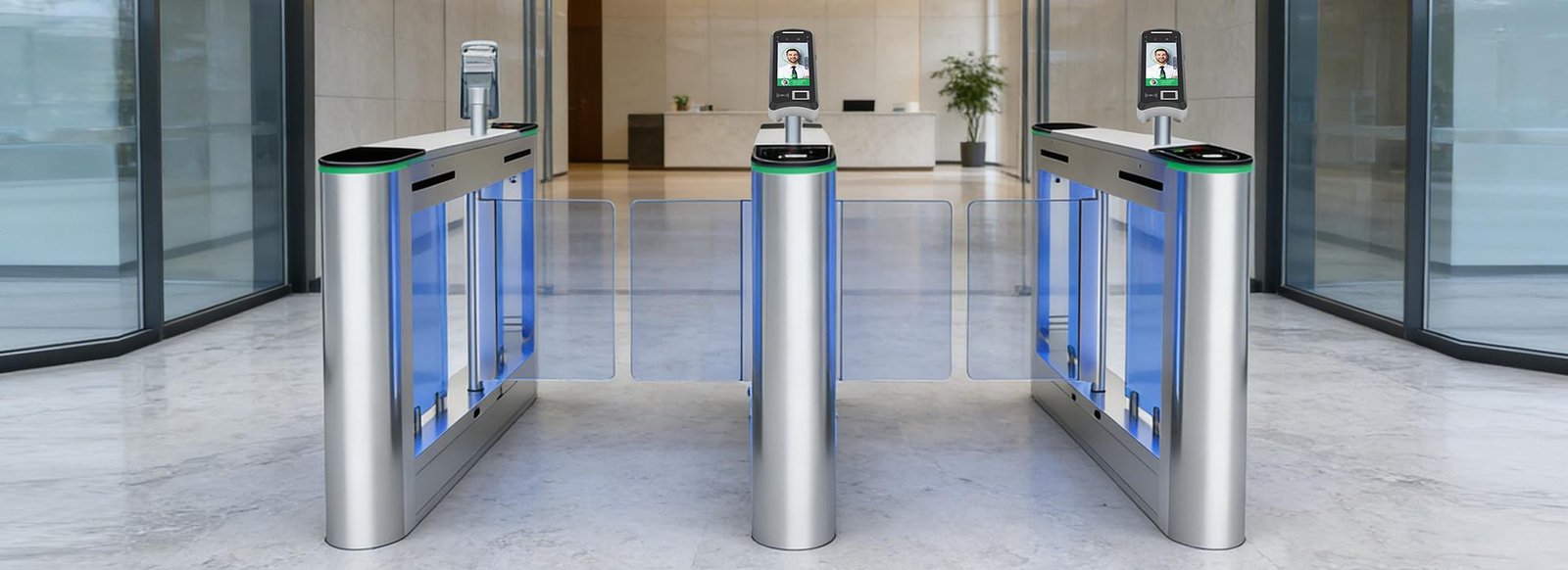
Speed Gate Turnstiles
Optical turnstiles and speed gates use sensors instead of physical rotating arms.
These systems provide fast, contactless access control and are commonly used in modern office buildings and corporate headquarters.
They offer a balance between security, convenience, and aesthetics.
Key Features of Modern Security Turnstiles
Modern turnstile systems combine mechanical design with intelligent technology to improve security and operational efficiency. The following features make them a reliable solution for access control in various facilities.
Access Control System Integration
Modern turnstiles can integrate with multiple authentication technologies such as RFID cards, biometric identification, QR codes, and mobile credentials. This integration allows organizations to manage access permissions centrally and ensure only authorized individuals can enter restricted areas.
Anti-Tailgating Detection
Many systems include sensors that detect when multiple individuals attempt to pass with a single authorization. When abnormal behavior is detected, the system can trigger alarms or temporarily block access.
Durable Structural Design
Most turnstiles are constructed with stainless steel or reinforced metal materials. This robust design ensures stable performance even in high-traffic environments and harsh outdoor conditions.
Real-Time Monitoring and Data Logging
Modern access systems record entry and exit information automatically. These records help security teams analyze traffic flow, review access history, and improve facility management.
Flexible Direction Control
Administrators can configure entry direction according to operational needs, such as entry-only, exit-only, or bidirectional access. This flexibility helps manage pedestrian flow more efficiently.
Emergency Safety Function
During emergencies such as fire alarms or power outages, the system can automatically unlock to allow safe evacuation. This feature ensures compliance with safety regulations while maintaining secure operation during normal conditions.
Benefits of Using Security Turnstiles
Implementing security turnstiles provides multiple operational and security advantages.
Improved Access Control
Turnstiles ensure that only authorized individuals can enter restricted areas, reducing the risk of unauthorized access.
Better Traffic Management
Security turnstiles regulate pedestrian flow, preventing overcrowding and improving movement efficiency during peak hours.
Reduced Security Costs
Automated access control systems reduce the need for manual monitoring by security personnel.
Accurate Entry Records
Turnstiles generate digital access logs that support attendance management, workforce monitoring, and security audits.
Enhanced Facility Security
By combining physical barriers with electronic authentication, security turnstiles create a comprehensive protection system.
Applications of Security Turnstiles


The Future of Security Turnstiles
The future of security turnstile systems is closely linked with advancements in smart technologies.
Emerging trends include:
AI-powered facial recognition access
Mobile credential authentication
Cloud-based access management
Integration with smart building systems
Touchless entry technology
These innovations will further enhance the role of security turnstiles as part of smart security infrastructure.
Conclusion
Security turnstiles have become an essential component of modern access control systems, providing secure, efficient, and intelligent entry management.
By combining physical security barriers, electronic authentication technologies, and real-time monitoring capabilities, security turnstiles help organizations protect facilities while maintaining smooth pedestrian flow.
From full height security turnstiles for high-security environments to modern speed gates for corporate buildings, these systems offer flexible solutions for a wide range of industries.
As security technology continues to evolve, security turnstiles will remain a key part of protecting people, assets, and critical infrastructure.