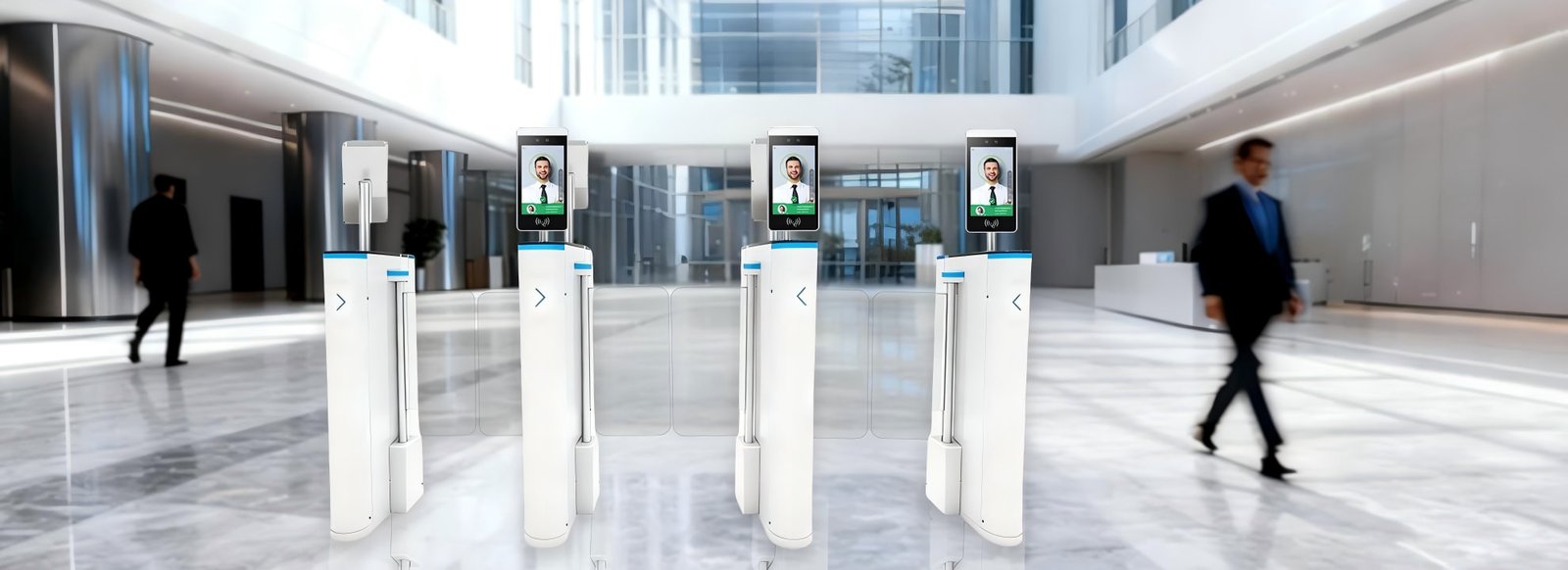
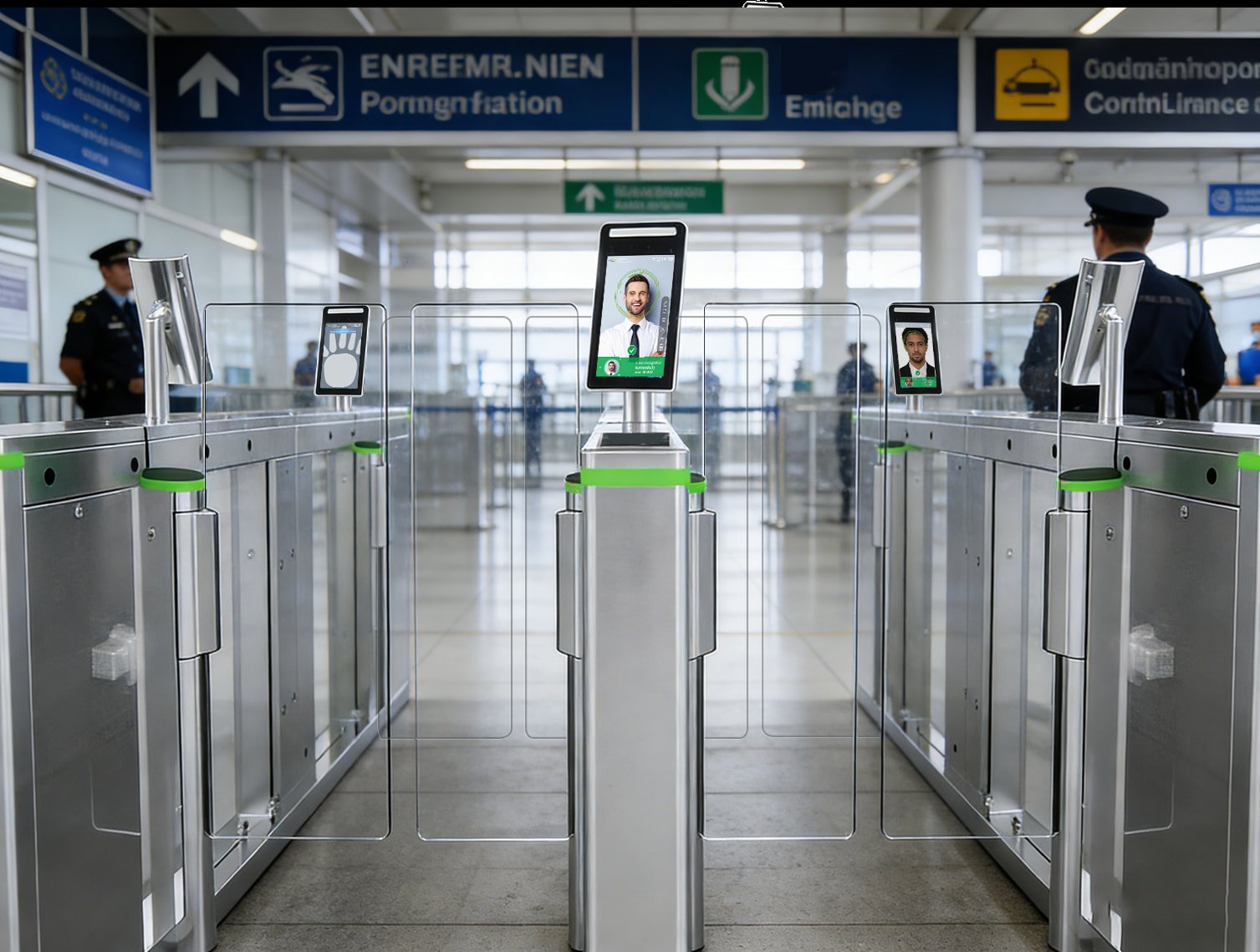
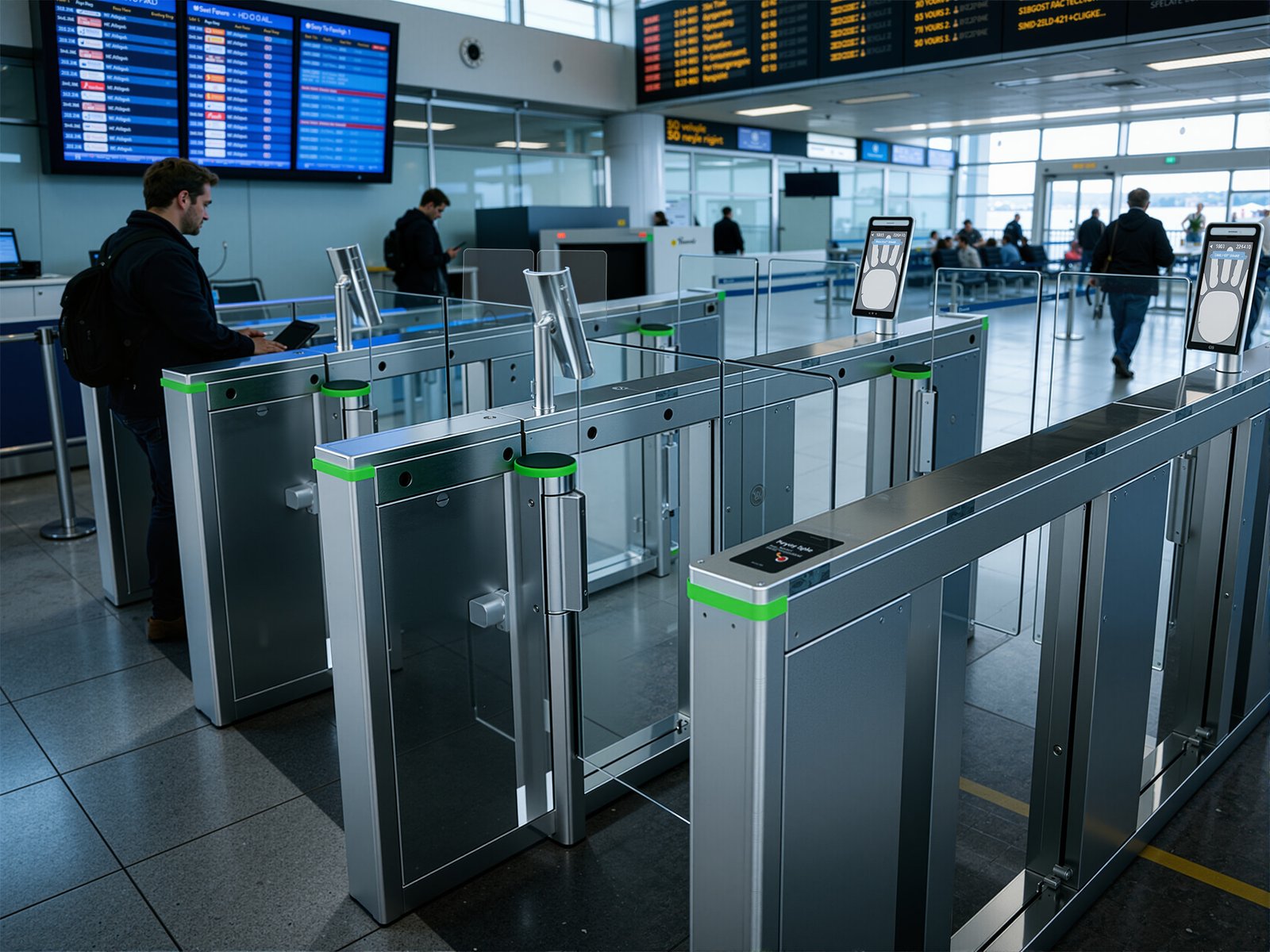
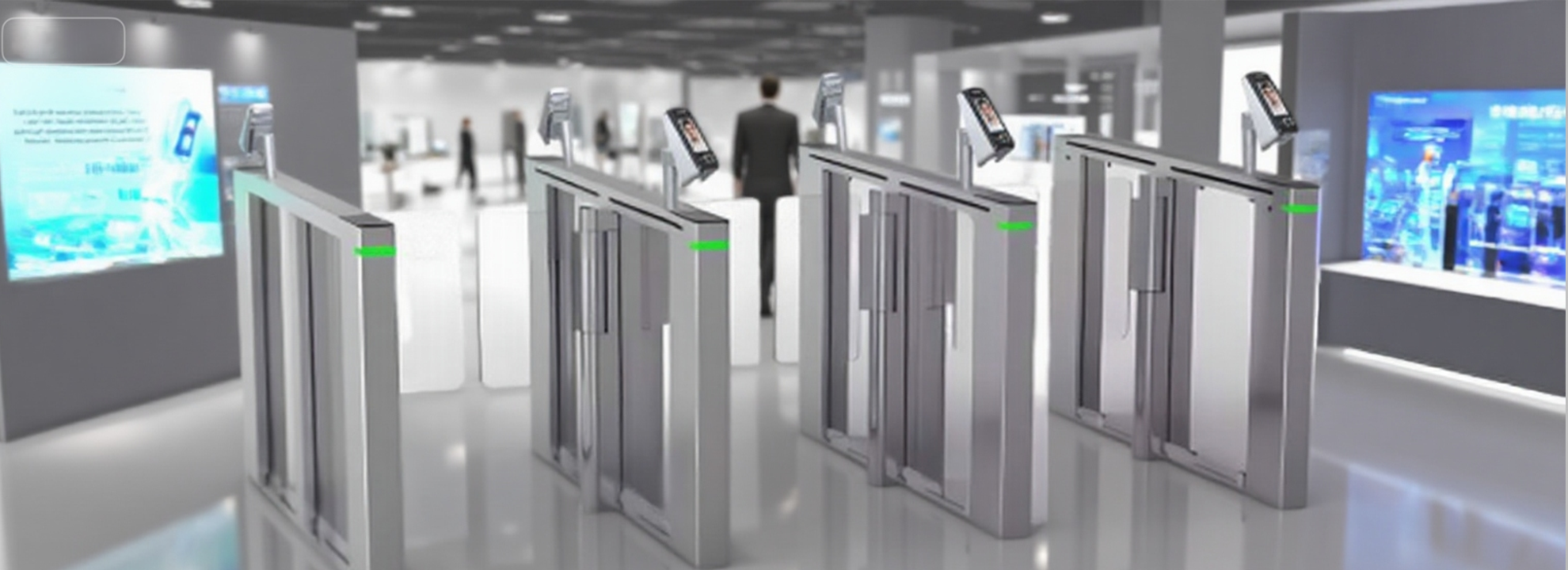
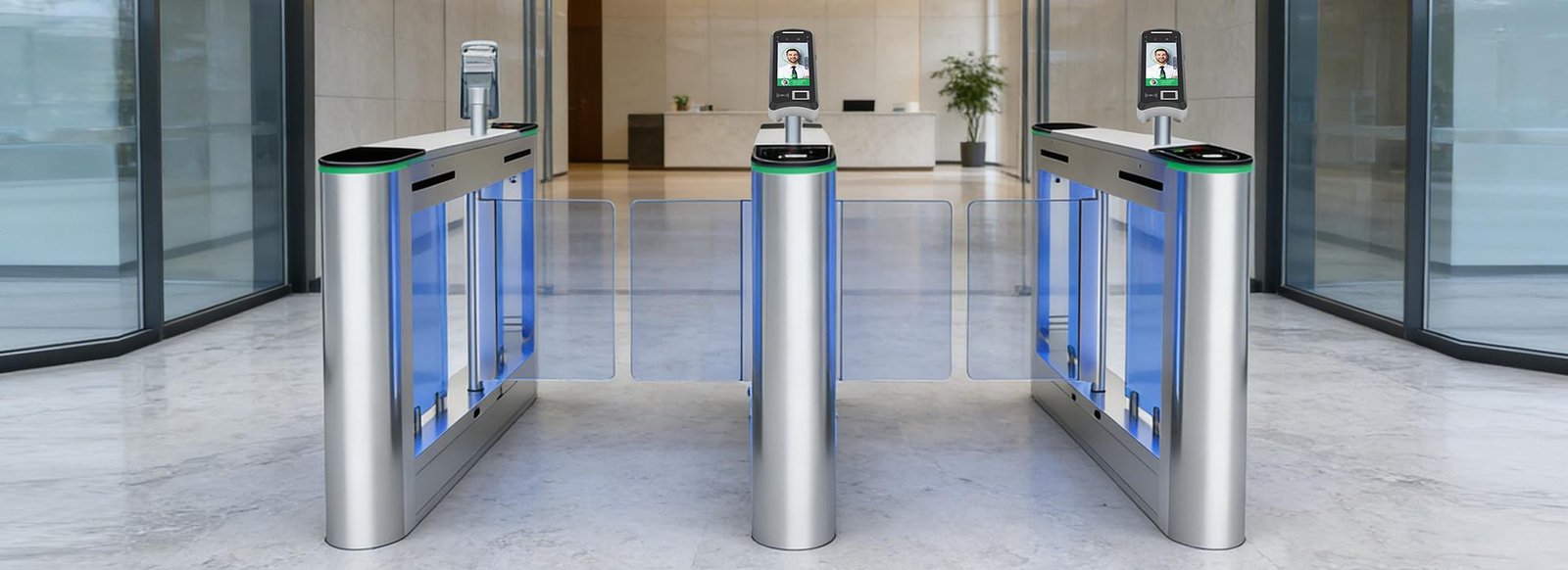
A Speed Gate Access Control System with Facial Recognition is an advanced security solution designed to provide fast, secure, and contactless pedestrian access control. As modern buildings demand both higher security and smoother traffic flow, speed gates combined with facial recognition technology have become a preferred choice for corporate offices, airports, financial institutions, and smart commercial facilities.
By integrating intelligent hardware with biometric authentication, this system ensures that only authorized individuals gain access while maintaining a seamless user experience.
What Is a Speed Gate Access Control System?
A speed gate access control system is a type of automated pedestrian gate that uses fast-opening barrier panels—typically made of glass or acrylic—to regulate entry and exit. Unlike traditional turnstiles, speed gates are designed for high-speed throughput and modern architectural environments.
When integrated with facial recognition, the system automatically verifies a person’s identity before granting access, creating a touchless and efficient security checkpoint.
How Facial Recognition Enhances Speed Gate Security
Facial recognition technology adds an intelligent biometric layer to the speed gate system. Instead of relying solely on access cards or PIN codes, the system analyzes unique facial features to confirm identity.
Key advantages include:
Contactless authentication for improved hygiene and convenience
High accuracy recognition even in high-traffic environments
Reduced risk of card sharing or loss
Faster verification compared to manual checks
As a result, organizations achieve stronger security without slowing down pedestrian movement.
Core Features of a Speed Gate Access Control System with Facial Recognition
1. High-Speed Passage Control
Speed gate turnstiles open and close rapidly, allowing quick passage while preventing tailgating. This makes them ideal for office lobbies and transportation hubs.
2. Intelligent Facial Recognition Technology
Advanced AI algorithms ensure accurate identity verification under different lighting conditions and angles.
3. Anti-Tailgating and Anti-Piggybacking Detection
Infrared sensors and intelligent logic detect unauthorized attempts to pass closely behind an authorized user.
4. Multi-Authentication Integration
Although facial recognition is primary, the system can also support:
RFID cards
QR codes
Mobile credentials
Fingerprint verification
This flexibility allows layered security when required.
5. Real-Time Monitoring and Data Management
All access events are recorded and can be monitored through centralized access control software for reporting and security analysis.
Applications of Speed Gate Systems with Facial Recognition
Corporate Office Buildings – Manage employee and visitor access while maintaining a professional entrance.
Airports – Control passenger flow in terminals, boarding areas, and restricted zones.
Metro and Subway Stations – Efficiently verify commuters and prevent fare evasion.
Banks and Financial Institutions – Secure sensitive areas such as vaults, server rooms, and offices.
Government Buildings – Protect offices, courts, and restricted administrative zones.
Data Centers and Server Rooms – Restrict access to IT personnel and authorized staff.
Educational Institutions – Secure entrances for universities, colleges, and research labs.
Hospitals and Healthcare Facilities – Control access to staff-only areas and high-risk zones.
Commercial Complexes and Shopping Malls – Manage visitor flow and prevent unauthorized entry.
Exhibition Centers and Event Venues – Streamline attendee entry and improve security monitoring.
High-Security Industrial Facilities – Protect factories, warehouses, and production zones.
Residential Gated Communities – Offer secure pedestrian entry for residents and staff.
Smart City Infrastructure – Integrate with IoT systems for urban access management.
Transportation Hubs – Ports, bus terminals, and ferry stations for controlled passenger entry.
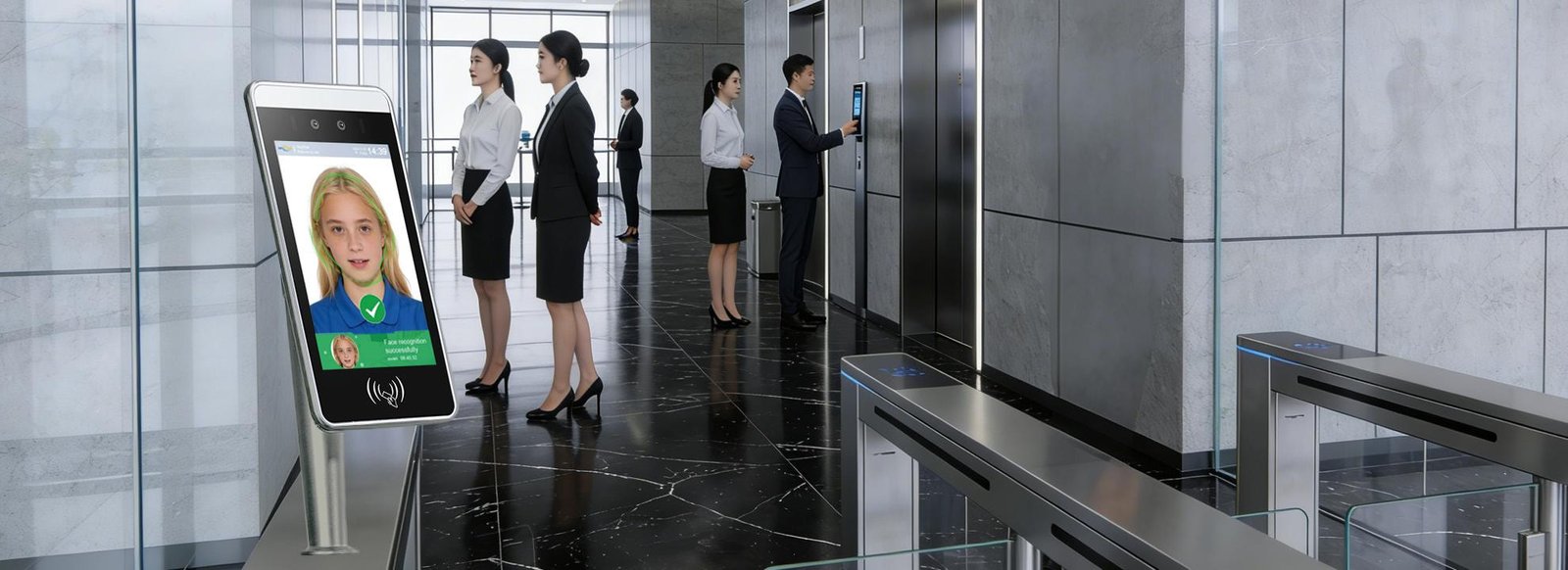
Benefits for Modern Access Control Environments
Enhanced Security
By combining physical barriers with biometric authentication, the system significantly reduces unauthorized entry risks.
Improved Traffic Flow
Because users do not need to stop to scan cards, pedestrian throughput increases, especially during peak hours.
Touchless and Hygienic Access
Contactless facial recognition supports healthier environments, which is particularly important in shared workspaces.
Smart System Integration
Speed gate access control systems can integrate with:
Visitor management systems
Time attendance platforms
Building management systems (BMS)
Security monitoring centers
This creates a fully connected smart building ecosystem.
Choosing the Right Speed Gate Facial Recognition System
When selecting a system, consider:
Daily pedestrian volume
Required security level
Indoor or outdoor installation
Integration with existing access control software
Data privacy and compliance requirements
A properly configured system ensures long-term reliability and scalability.
Future Trends in Speed Gate Access Control
Looking ahead, speed gate systems with facial recognition are evolving to include:
AI-powered identity verification
Cloud-based access control management
Big data analytics for traffic flow optimization
Integration with smart city and IoT infrastructure
These innovations will continue to enhance both security and operational efficiency.
Conclusion
A Speed Gate Access Control System with Facial Recognition offers the perfect balance between high-level security and fast, convenient access. By combining intelligent biometric authentication with rapid physical barrier control, organizations can secure their facilities while delivering a smooth user experience.
As buildings become smarter and security requirements grow, facial recognition speed gate systems are set to become a standard solution for modern access control.