
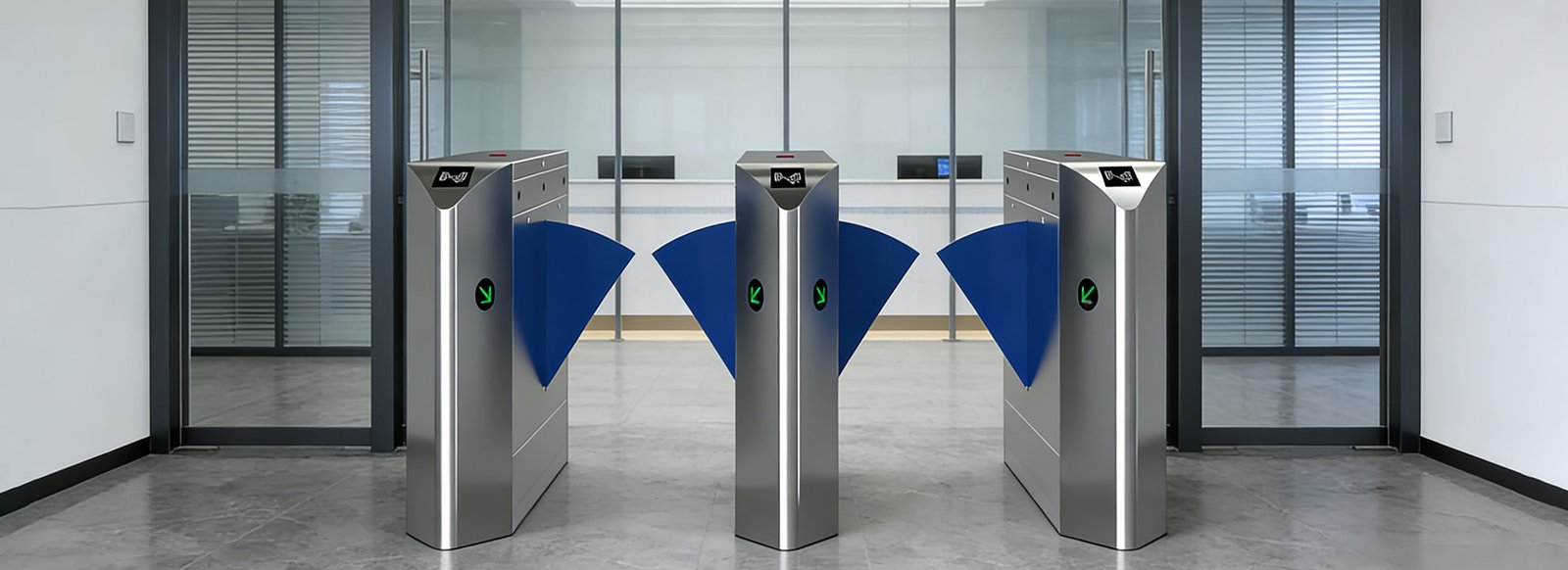
As modern buildings place higher demands on security, efficiency, and user experience, traditional access control methods are no longer sufficient. A wing gate for access control has become a preferred solution for managing pedestrian flow while maintaining a high level of security.
Wing gate systems are widely used in offices, commercial buildings, transportation hubs, gyms, schools, and healthcare facilities. Below, we explore the key benefits of using a wing gate access control system and why it is increasingly adopted worldwide.
Enhanced Security and Controlled Access
One of the primary benefits of using a wing gate for access control is its ability to prevent unauthorized entry. Wing gates operate with motorized barriers that only open after successful authentication, ensuring controlled access at all times.
Combined with infrared sensors, wing gates can effectively detect tailgating, reverse passage, or forced entry attempts. This makes them significantly more secure than manual or low-level access solutions.
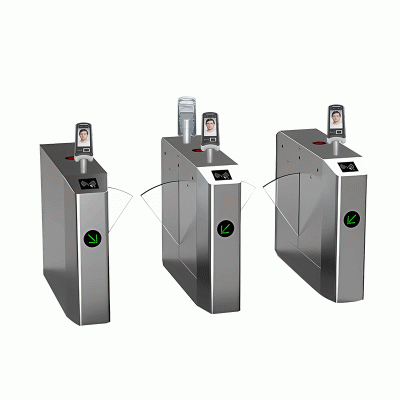
Support for Multiple Authentication Methods
A modern wing gate access control system is designed to work with various authentication technologies. These may include:
Biometric recognition such as face recognition, fingerprint recognition, or palm vein recognition
RFID or NFC cards
QR codes and mobile credentials
This flexibility allows organizations to choose or combine access methods based on their security level, budget, and operational needs, making wing gates suitable for both small and large-scale projects.
Improved Pedestrian Flow Efficiency
Wing gates are engineered to handle high pedestrian traffic efficiently. The fast response of motorized wings enables smooth entry and exit, reducing congestion during peak hours.
Compared to traditional turnstiles, wing gates provide a wider and more comfortable passage, which is particularly beneficial for users carrying bags, using wheelchairs, or pushing carts.
Better User Experience and Accessibility
User experience is a key factor in modern access control design. Wing gate systems offer a quiet, smooth, and intuitive operation, making them more user-friendly than mechanical turnstiles.
The design of wing gates also supports accessibility requirements, ensuring safe and convenient passage for elderly users and people with disabilities when properly configured.
Modern Appearance for Professional Environments
A wing gate for access control is not only functional but also visually appealing. With a sleek and modern design, wing gates enhance the overall appearance of building entrances.
They integrate seamlessly into office lobbies, corporate headquarters, commercial centers, and smart buildings, reinforcing a professional and high-tech image.
Seamless Integration with Access Control Systems
Wing gate turnstiles can be easily integrated with:
Access control management software
Time and attendance systems
Visitor management platforms
Building management systems
This integration allows administrators to monitor access events, generate reports, and manage permissions efficiently from a centralized system.
Reliable Safety and Emergency Design
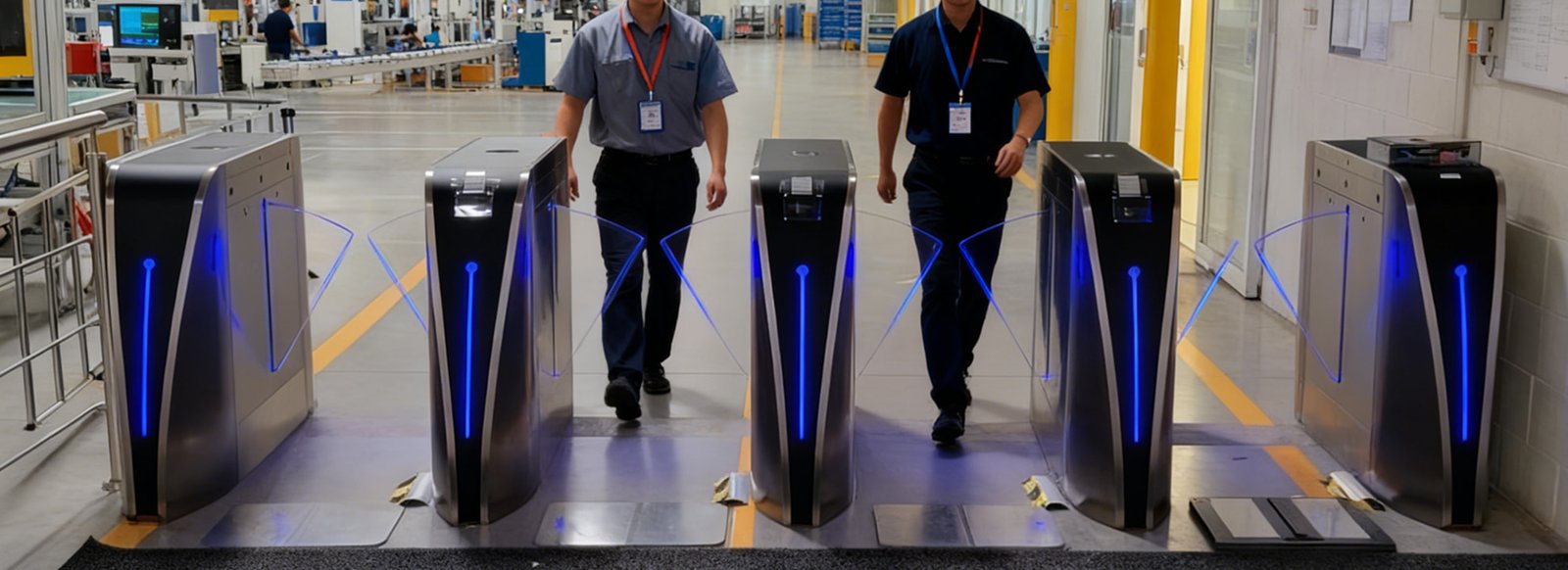
Safety is a critical benefit of wing gate access control systems. In case of power failure or emergency signals, wing gates are designed to automatically open, allowing free passage.
This feature ensures compliance with fire safety and emergency evacuation regulations, making wing gates suitable for public and commercial environments.
Flexible Customization for Different Applications
Wing gate systems can be customized to meet different project requirements. Customization options may include:
Gate width and height
Materials and finishes
Indoor or semi-outdoor installation
Integration with different access control technologies
This flexibility makes wing gates adaptable for a wide range of industries and environments.
Typical Applications of Wing Gate Access Control
Wing gate access control systems are commonly used in:
Office buildings and corporate workplaces
Commercial buildings and shopping malls
Airports and metro stations
Gyms and fitness centers
Schools and universities
Hospitals and healthcare facilities
Government and public institutions
Each application can choose the appropriate authentication method and configuration.
Conclusion
The benefits of using a wing gate for access control extend beyond basic entry management. With enhanced security, efficient pedestrian flow, modern design, and system integration capabilities, wing gate access control systems provide a reliable solution for today’s smart buildings.
As security requirements continue to evolve, wing gates offer a scalable and future-ready approach to pedestrian access management.